




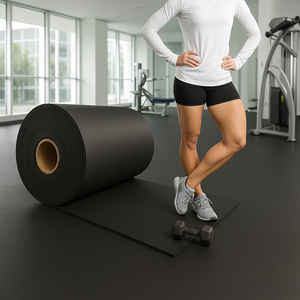


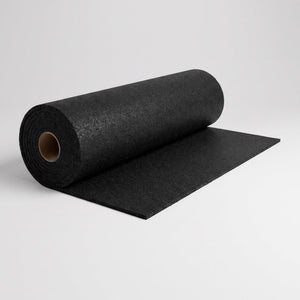
Acoustic Rubber Gym Flooring Underlay 10m x 1m
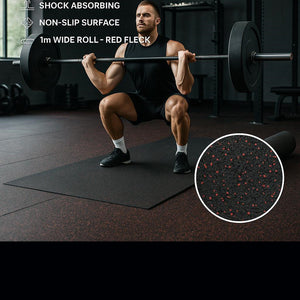
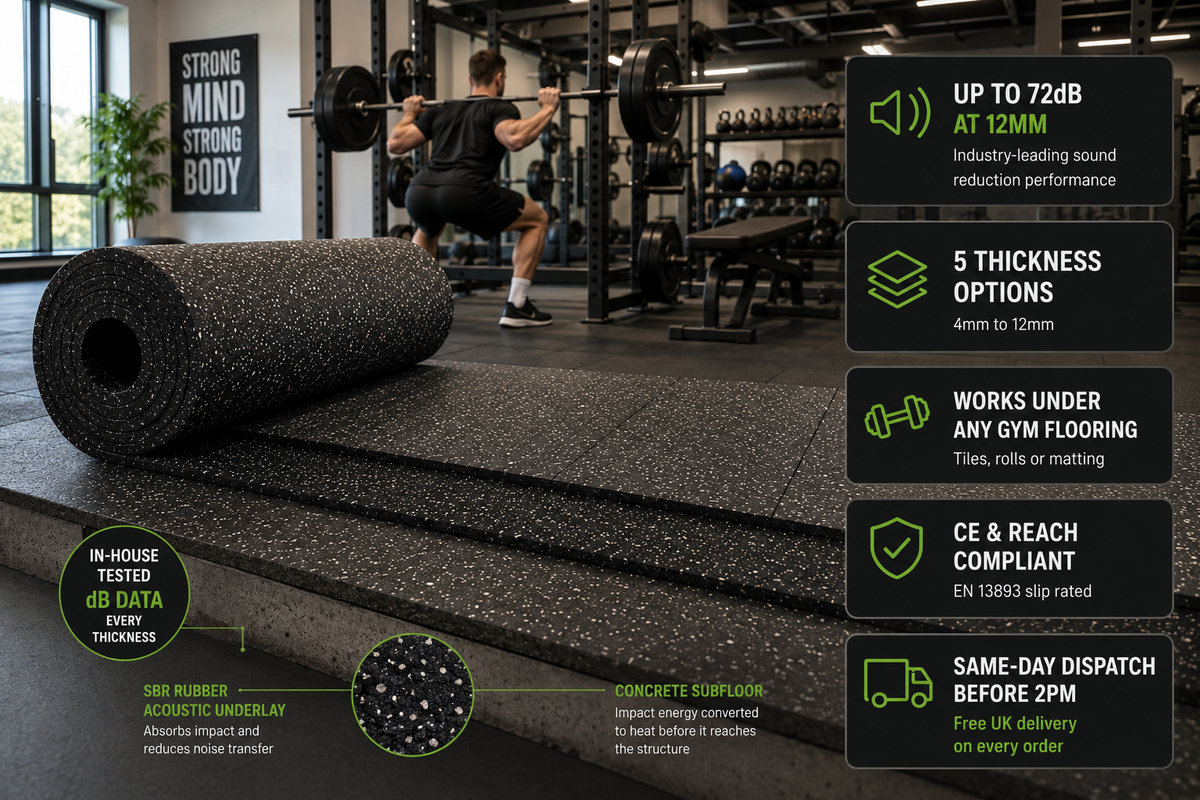
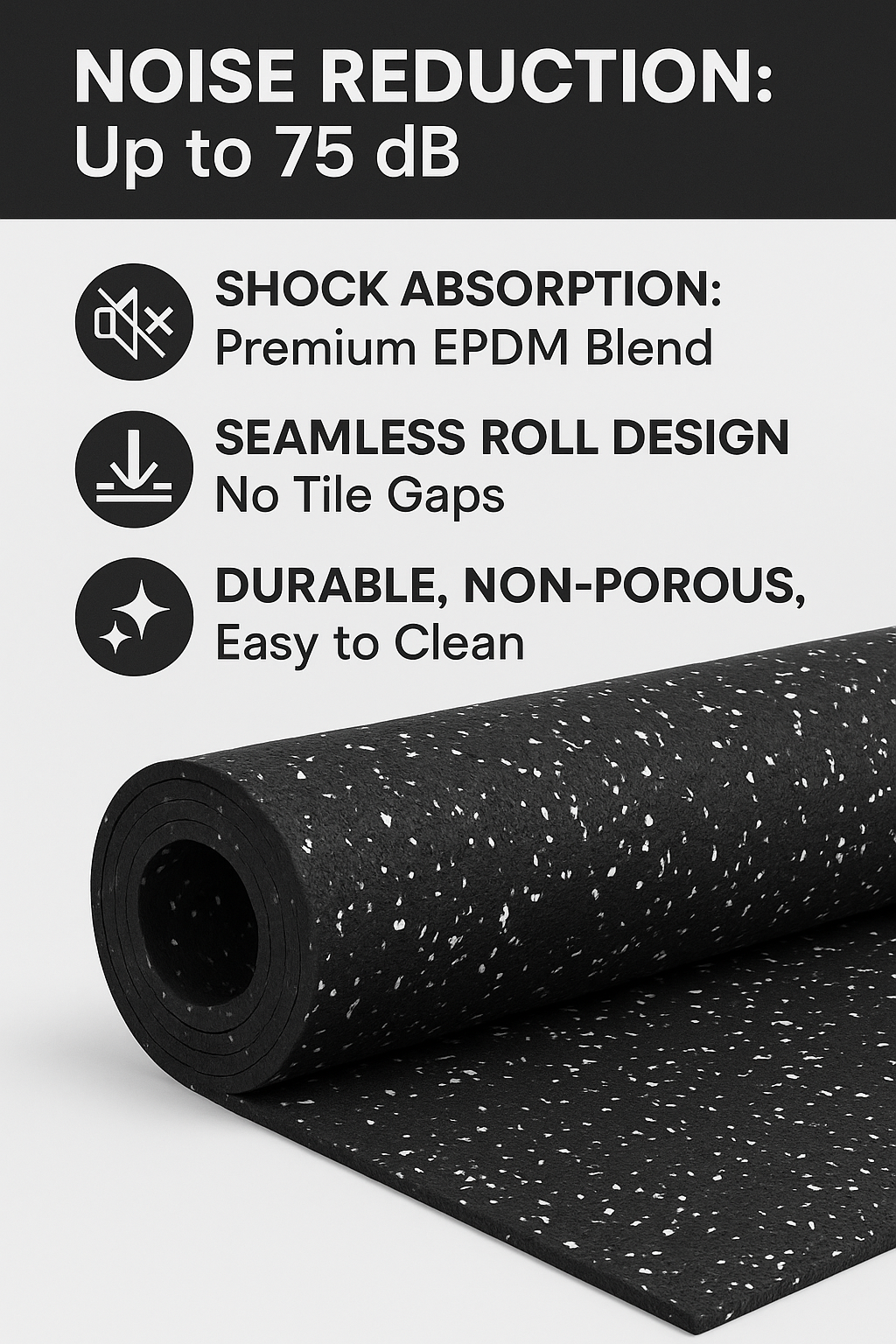
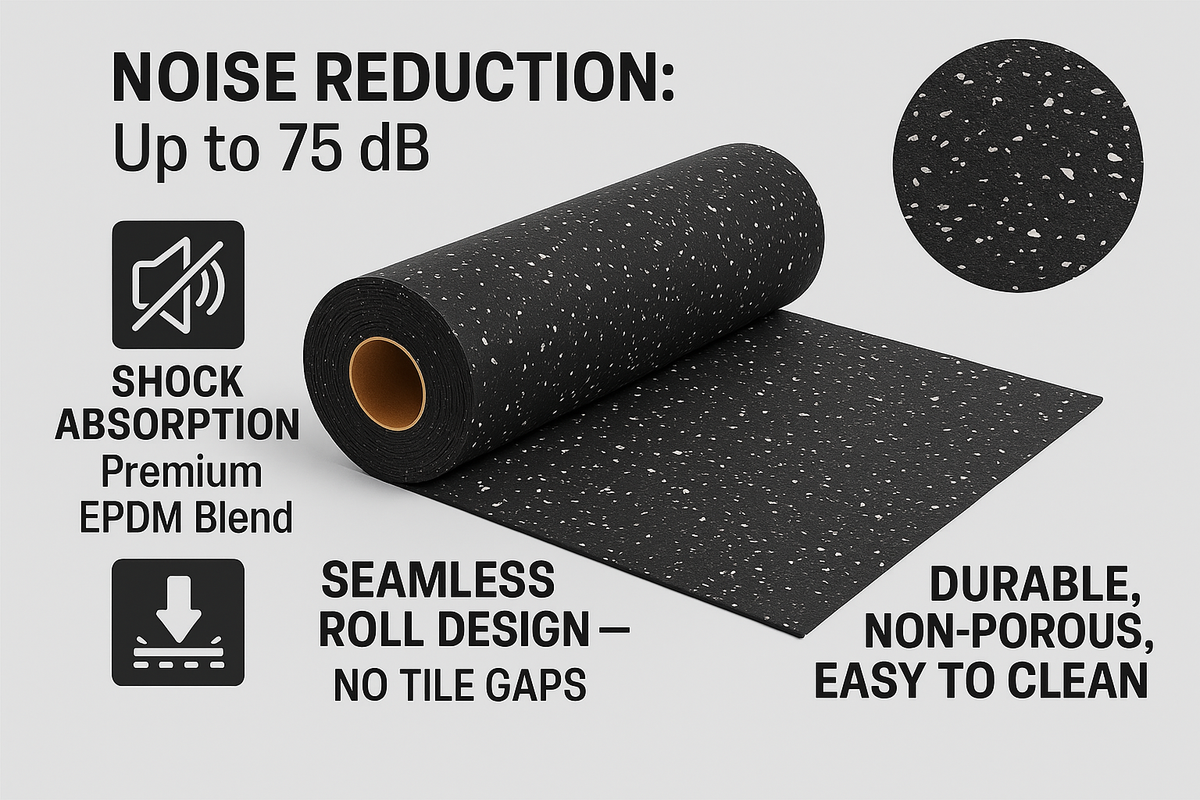
- Up to 72dB impact sound reduction, in-house tested
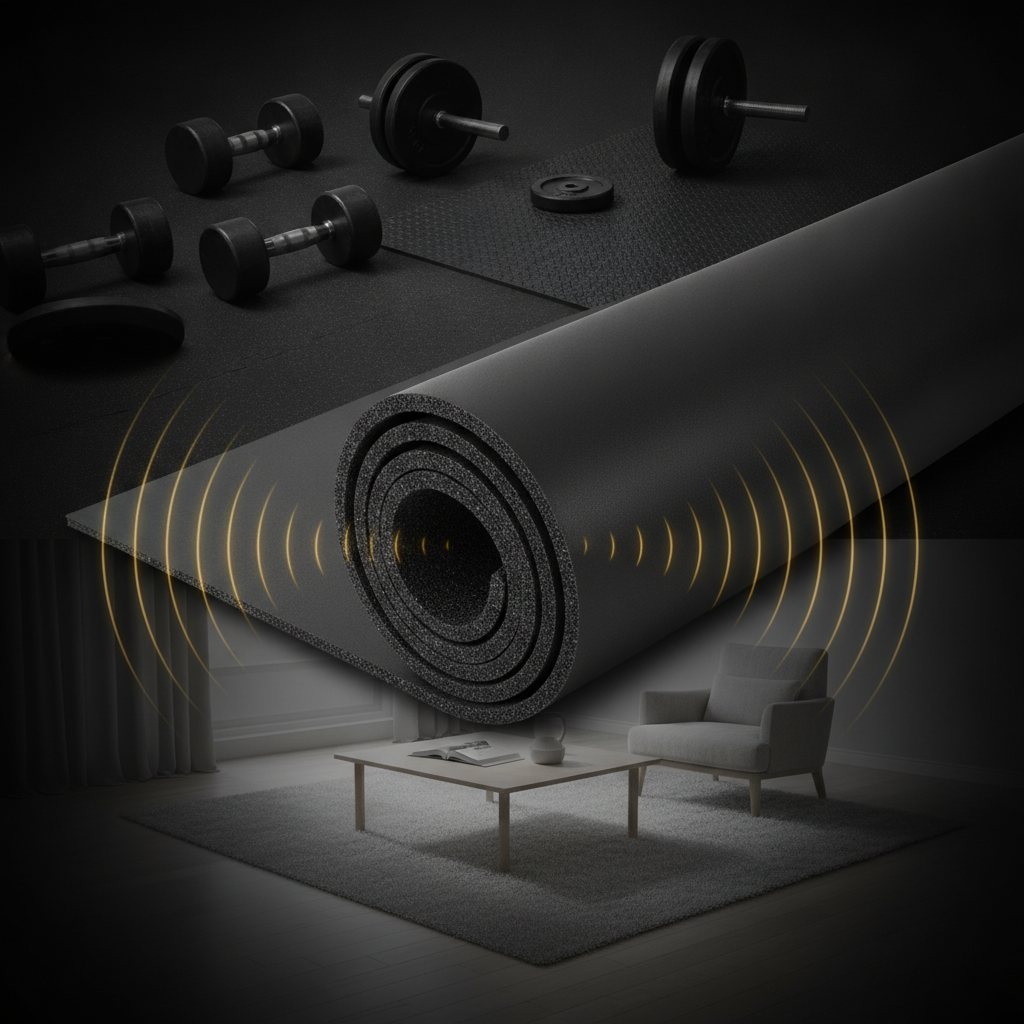
- Dedicated decoupling layer: stops gym vibration entering the building
- Made for flats, upstairs gyms and studios above occupied rooms
- Works under any gym tiles, rolls or lifting platform
How many do I need?Enter your room size and we'll set the quantity
-
Free UK deliveryMainland UK, no minimum order
-
2-Year WarrantySee what's covered
-
14-day returnsUnused product
-
Secure checkoutEncrypted payment
Compare our rubber rolls
Prices include VAT and free UK mainland delivery.
| Product | Thickness | Size | Key feature | Price per m² | Rating |
|---|---|---|---|---|---|
 Rubber Gym Flooring Roll Cut to Length Rubber Gym Flooring Roll Cut to Length
|
4–12mm | 1m wide, per metre | Priced Per Metre | from £39.00 | ★ 5.0 (37) |
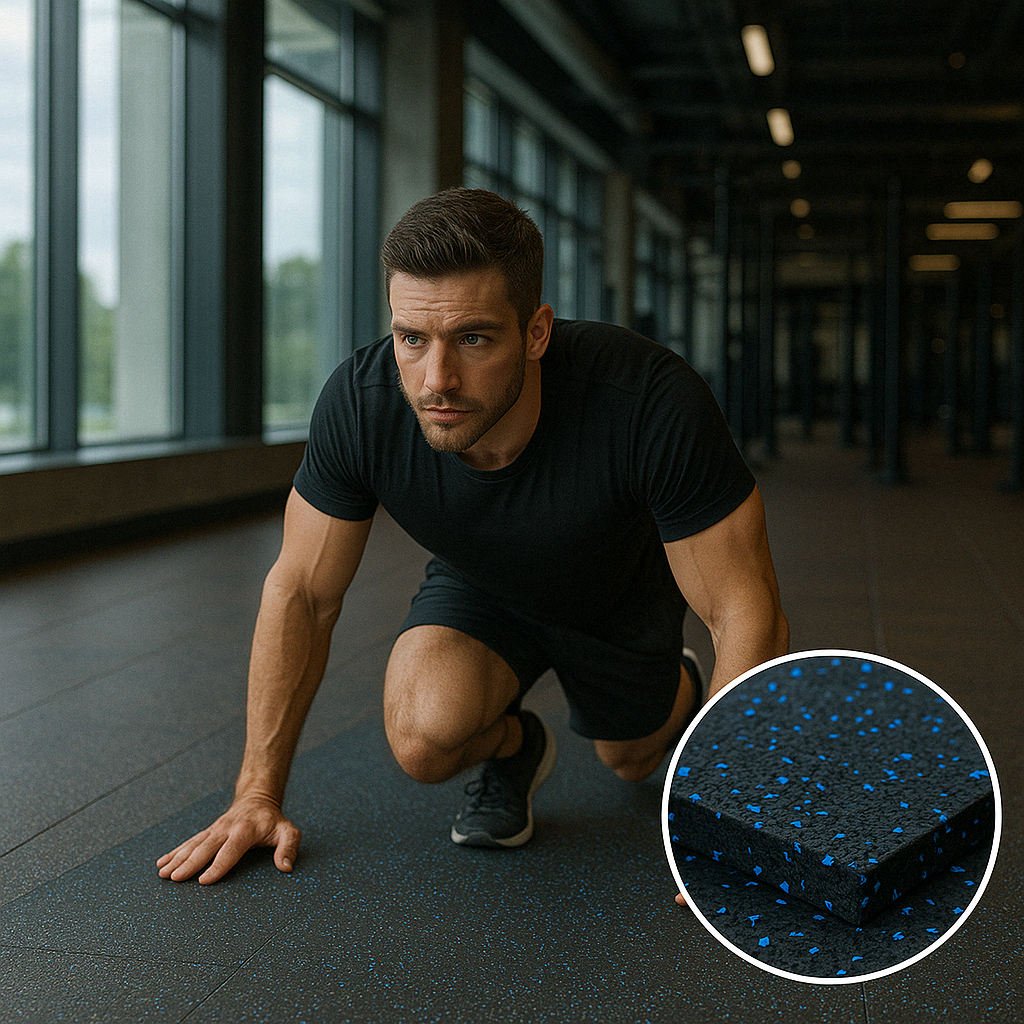
 Rubber Crumb Gym Flooring Roll 10m x 1m Rubber Crumb Gym Flooring Roll 10m x 1m
|
4–12mm | 10m × 1m roll | Commercial Crumb Finish | from £19.90 | ★ 5.0 (45) |
 Smooth Rubber Gym Flooring Roll 10m x 1m Smooth Rubber Gym Flooring Roll 10m x 1m
|
4–12mm | 10m × 1m roll | Commercial Smooth Finish | from £19.90 | ★ 5.0 (35) |
 Acoustic Rubber Gym Flooring Underlay 10m x 1mYou're viewing this Acoustic Rubber Gym Flooring Underlay 10m x 1mYou're viewing this
|
4–12mm | 10m × 1m roll | Up to 72dB Sound Reduction | from £19.90 | — |
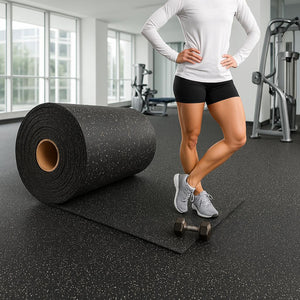
Heavy-duty acoustic rubber underlay in full 10m x 1m rolls, delivering up to 72dB sound reduction as a dedicated impact decoupling layer beneath your gym floor. It is the layer that stops gym noise getting into the building: lay it first, then your gym tiles or rolls on top. The right specification for any training space above an occupied room, from flats and upstairs home gyms to first-floor PT studios, hotel gyms and commercial facilities.
Five thicknesses from 4mm to 12mm and four colours. High-density recycled SBR rubber, CE and REACH certified, EN 13893 slip rated. Same-day dispatch on orders placed before 2pm, with free UK mainland delivery on every order.
- Up to 72dB sound reduction: in-house tested under real gym conditions
- Dedicated impact decoupling layer: breaks the vibration path into the floor structure
- 10m x 1m rolls: 10m² per roll, each run seamless along its full length
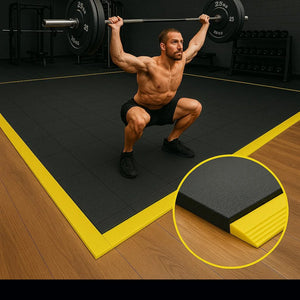
- Works under any gym flooring: rubber tiles, rolls, interlocking tiles and lifting platforms
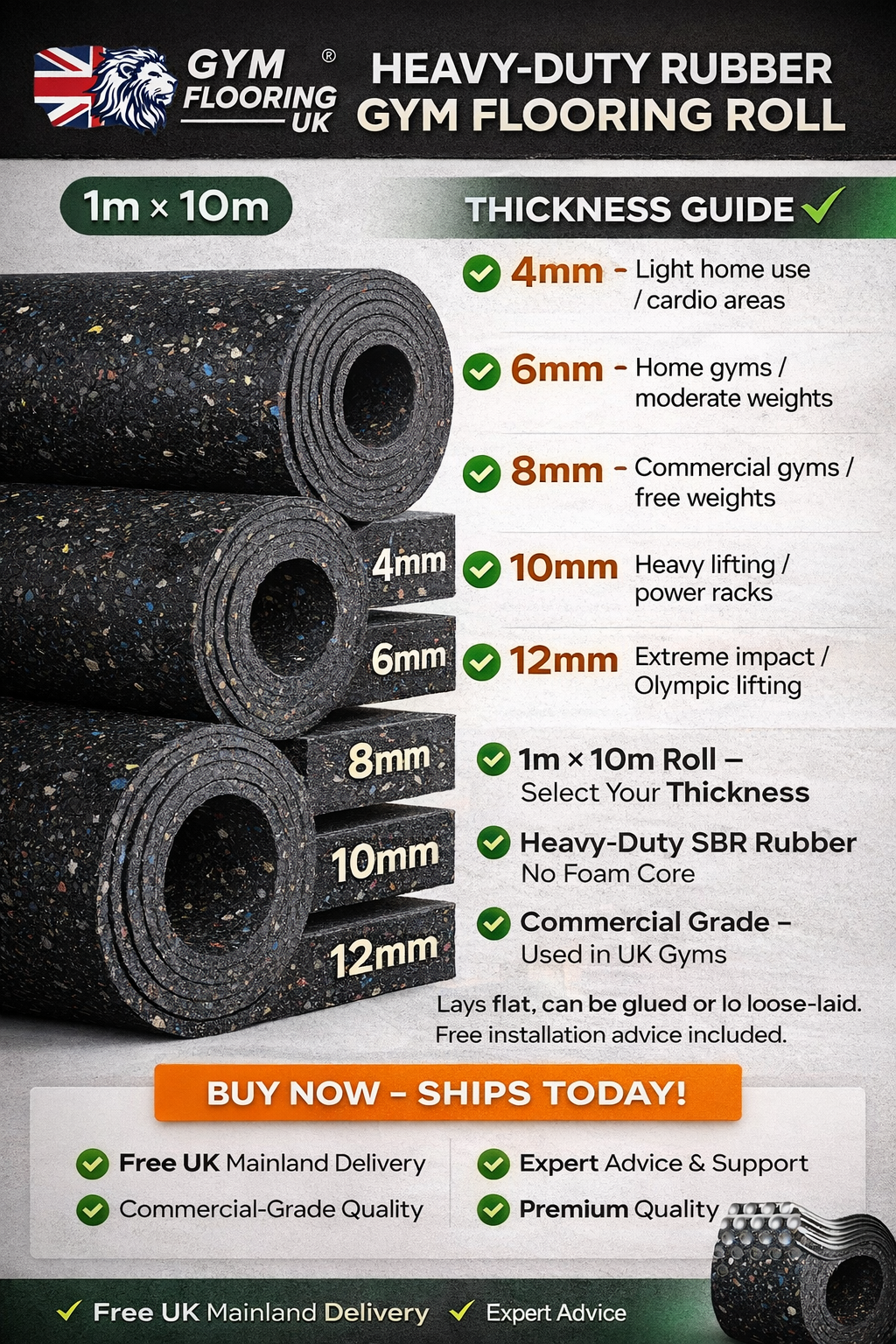
- 5 thicknesses, 4mm to 12mm: matched to how heavily you train
Why Gym Noise Travels Through Buildings
Gym flooring is designed to absorb impact at the surface: it protects the subfloor, cushions joints and reduces equipment vibration. But when a weight drops or a treadmill runs, the energy that the surface doesn't absorb travels into the floor as structure-borne vibration. It passes through joists, concrete or screed and radiates as sound in the rooms below and next door.
This is different from airborne noise such as music or voices. Wall panels and thicker tiles on their own can't stop it. The effective solution is a resilient decoupling layer between the subfloor and the gym floor, with the mass and elasticity to interrupt the vibration path before it enters the building. That is what this underlay does.
The Two-Layer Acoustic System
Acoustic engineers use a mass-spring system to control impact noise, and a gym floor with underlay works exactly that way:
- The mass: your gym tiles or rubber roll on top absorb the impact and spread the load
- The spring: this resilient underlay beneath separates that mass from the building structure
Together they are significantly more effective than either layer on its own. Even a dense 30mm tile laid straight onto the floor stays in direct contact with the structure, so any vibration that passes through it goes straight into the building. Put the underlay beneath it and that path is interrupted.
Recommended systems:
- Flats and upstairs gyms with free weights: 8–12mm underlay + 30mm acoustic rubber tiles
- Heavy barbell work above occupied rooms: 12mm underlay + 30mm acoustic tiles, with lifts set down rather than dropped from overhead
- Upstairs cardio and studio rooms: 4–6mm underlay + our cut-to-length rubber roll
- Larger floors: 8–10mm underlay + our 10m rubber crumb rolls
Which Thickness? Up to 72dB Sound Reduction
The acoustic performance of a decoupling layer rises with its mass and resilience, so choose the thickness by how heavily you train. Where budget and floor height allow, thicker is always the acoustically stronger choice.
| Thickness | Recommended use | Sound reduction |
|---|---|---|
| 4mm | Cardio zones (treadmills, bikes, rowers) where floor height is limited | Up to 55dB |
| 6mm | Group fitness, studio and functional training with moderate impact | Up to 60dB |
| 8mm | General free-weight areas; the recommended minimum for most first-floor home gyms | Up to 65dB |
| 10mm | Dumbbell and barbell zones with regular loaded drops | Up to 68dB |
| 12mm | High-load commercial use: heavy barbell work and busy daily training | Up to 72dB |
Sound reduction figures come from in-house property testing under real gym conditions. They reflect the underlay as a standalone decoupling layer; the combined system with gym flooring on top performs better still. Your own result will depend on the building and floor construction.
Expert Tips for the Quietest Floor
- Cover the whole room: lay underlay across the entire training area, not just under the weights. Any bare section gives vibration a way into the structure.
- Butt and tape every join: join rolls edge to edge and tape the seams, so the underlay acts as one continuous layer.
- Keep it off the walls: leave about 5mm between the underlay and the walls, so vibration can't pass straight into them. Skirting can cover the gap.
- Run the rolls under heavy kit: make sure racks, platforms and cardio machines sit fully on the underlay, not half on and half off.
- Don't fix it rigidly: loose-lay where you can. Rigid screws through the underlay create a direct path into the floor.
Why Full 10m Rolls
Every join in an underlay is a potential weak point where vibration can bypass the decoupling layer. A 10m roll gives you a seamless run along the whole length of most rooms, with joins only where rolls meet side by side, and those are taped. That matters most beneath impact zones such as lifting platforms, dumbbell racks and cardio machines, where vibration loads are highest.
Works Under Any Gym Flooring
- Rubber gym tiles of any thickness: the standard two-layer specification for upstairs gyms
- Rubber gym rolls: adds a decoupling layer beneath any roll floor
- Interlocking tiles: full acoustic treatment beneath puzzle-edge and butt-join tiles
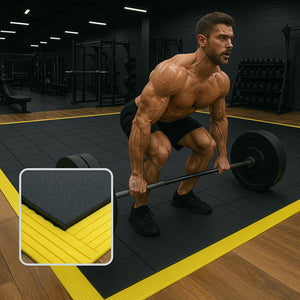
- Weightlifting platforms: reduces structure-borne transmission from barbell work
- Cardio equipment: isolates machine vibration from treadmills, bikes and rowers
- On its own in light-use spaces: suitable as a single layer for yoga, Pilates and bodyweight training
Where It's Specified
- Flats and apartments: the right acoustic specification for any home gym above ground floor
- Upstairs rooms: spare bedrooms, loft conversions and first-floor rooms
- Terraced and semi-detached houses: gyms sharing a floor or party wall with neighbours
- First-floor PT studios: studios above shops, offices and other tenants
- Hotel and corporate gyms: where noise in rooms and corridors must be kept down
- Universities and schools: gyms above teaching rooms, offices or labs
- Commercial gyms in multi-occupancy buildings: any facility with an occupied floor below
| Roll size | 10m x 1m (10m² per roll) |
|---|---|
| Thicknesses | 4mm, 6mm, 8mm, 10mm, 12mm |
| Approx. roll weight | 4mm 47kg, 6mm 67kg, 8mm 87kg, 10mm 107kg, 12mm 127kg |
| Colours | Black, Red, Blue, White |
| Material | High-density recycled SBR rubber |
| Acoustic function | Impact decoupling (structure-borne vibration break) |
| Sound reduction | Up to 55dB (4mm) to up to 72dB (12mm), in-house tested |
| Surface | Smooth, sits cleanly under surface flooring |
| Slip resistance | EN 13893 |
| Compliance | CE, REACH |
| Installation | Loose-lay, tape or adhesive |
| Suitable subfloors | Concrete, screed, timber, existing hard floors |
How Many Rolls Do I Need?
Each roll is 10m x 1m and covers 10m². Lay the underlay in 1m-wide runs along the length of the room: you need one run per metre of room width (rounded up), and each 10m roll can be cut into shorter runs. Add up the total length of runs and divide by 10, making sure each run fits within a roll.
| Room | Runs needed | Rolls to order |
|---|---|---|
| 3m x 3m (spare bedroom) | 3 runs of 3m | 1 |
| 3m x 4m (large bedroom) | 3 runs of 4m (2 per roll) | 2 |
| 4m x 5m (loft or studio) | 4 runs of 5m (2 per roll) | 2 |
| 5m x 6m (PT studio) | 5 runs of 6m | 5 |
| 10m x 8m (commercial floor) | 8 runs of 10m | 8 |
Order the same area of gym flooring to go on top. Not sure? Send us your room sizes and we'll plan the underlay and the gym floor together.
Installation
- Prepare the subfloor: clean, dry, level and free of debris. Concrete, screed and timber are all suitable.
- Acclimatise: leave the roll in the room for 24 hours so the rubber relaxes to its resting size.
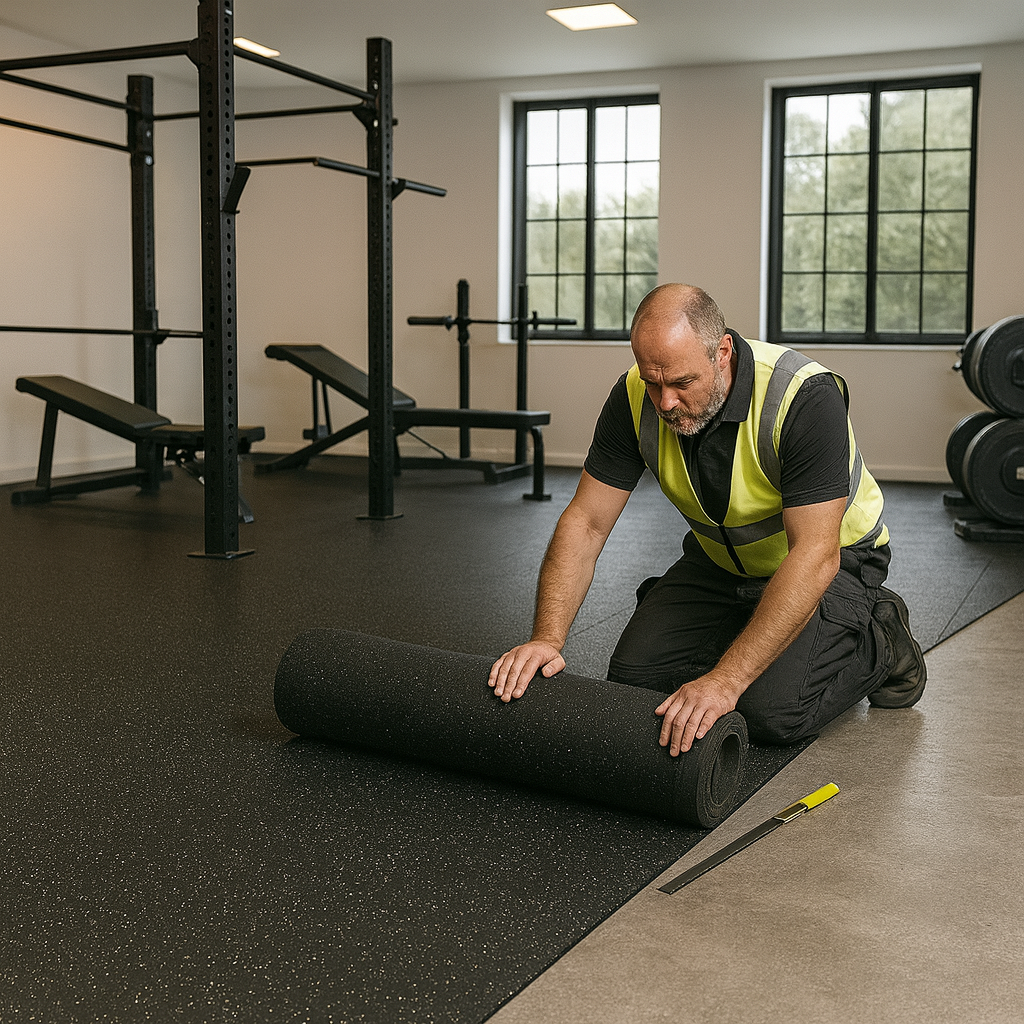
- Lay the underlay: unroll it across the floor, leaving about 5mm at the walls. Loose-lay is enough for most rooms; for permanent commercial floors, use perimeter adhesive or double-sided tape at edges and seams.
- Join the rolls: butt adjacent rolls edge to edge and tape the seams from above.
- Lay your gym floor: fit rubber tiles, rolls or matting directly on top of the underlay.
No specialist tools or contractors needed. Most rooms are done in a single session.
Free UK mainland delivery on every order, with no minimum spend. Orders placed before 2pm Monday to Friday are dispatched the same day. Rolls are heavy, so they are delivered on a pallet; plan for two people to move each roll. 14-day returns on unused, uncut rolls in their original condition.
Do I need acoustic underlay if I already have thick gym tiles?
On a ground floor with no occupied room below, usually not. Above any occupied room, yes. Thick tiles absorb impact at the surface but stay in contact with the floor, so any vibration that passes through them goes straight into the building. The underlay provides the break that gym flooring alone can't.
Which thickness is right for me?
8mm suits most first-floor home gyms with free weights. Choose 10–12mm for heavy barbell work and busy commercial floors, and 4–6mm where floor height is limited or for cardio and bodyweight rooms.
What should I put on top?
For flats and upstairs gyms with weights, our 30mm acoustic rubber tiles give the best combined result. For cardio and studio rooms, a 6–8mm rubber roll is ideal.
Can I use it under interlocking tiles?
Yes. It works beneath interlocking tiles, butt-join tiles, rubber rolls and any other gym flooring. Lay the underlay across the whole floor first, then the gym floor on top.
Does it need to be fixed down?
Usually not. The weight of the roll and the flooring on top keep it in place. For busy commercial floors and doorways, use perimeter adhesive or double-sided tape.
How much height does it add?
Just the thickness you choose, 4mm to 12mm, plus your gym flooring on top. Check door clearances before ordering, especially with 12mm underlay under 30mm tiles.
How many rolls do I need?
Each roll covers 10m². Plan one 1m-wide run per metre of room width; each 10m roll can be cut into shorter runs. See the table above, or send us your room sizes.
Can I get a free sample?
Yes. Request a free sample to compare thicknesses before you order.
Do you supply fit-out contractors and acoustic consultants?
Yes. We work with gym fit-out contractors, acoustic consultants, architects and developers across the UK. Contact our commercial team for a bulk quote, usually within 24 hours.
Complete Your Floor
 SALE
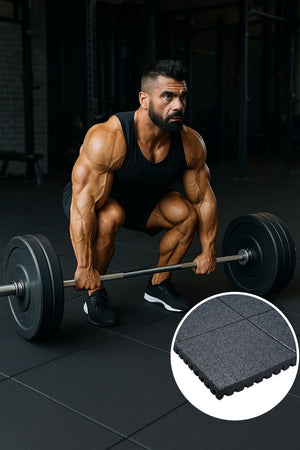
SALE30mm Heavy Duty Rubber Gym Tiles | 600kg Rated | Oly...
 SALE
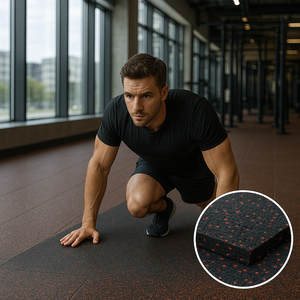
SALESmooth Rubber Gym Flooring Roll 10m x 1m | Commercia...
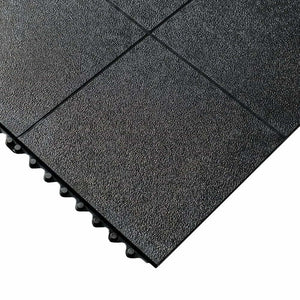
17mm Interlocking Rubber Gym Mats | 3ft x 3ft (915mm...
Rubber Crumb Gym Flooring Roll 10m x 1m | Commercial...
Trusted By Leading Organisations