






Rubber Gym Tiles vs Rubber Rolls: Which Is Better? UK Guide 2026
Rubber Gym Tiles vs Rubber Rolls: Which Is Better? UK Guide 2026
For most UK home gym owners, rubber gym tiles are better than rubber rolls — they are easier to install yourself (no specialist tools or adhesives needed), can be removed or reconfigured, and are ideal for partial floor coverage. Rubber rolls are better for large commercial spaces (100 m²+) where a seamless, joint-free surface is important and professional installation is available. Choose tiles for home gyms, garages, and CrossFit boxes. Choose rolls for commercial gym floors, sports halls, and permanent large-area installations.
Choosing between rubber gym tiles and rubber rolls represents one of the most important decisions in creating an effective workout space. Both formats offer exceptional performance characteristics, but their different installation methods, maintenance requirements, and suitability for various applications make this choice critical for optimal results. This comprehensive comparison examines every aspect of tiles versus rolls, helping you make the informed decision that best serves your specific needs, space constraints, and long-term goals.
Understanding the Fundamental Differences
The distinction between rubber gym tiles and rubber rolls extends far beyond format differences. Each system offers unique advantages in installation flexibility, maintenance efficiency, space suitability, and long-term performance characteristics.
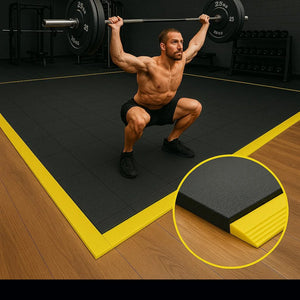
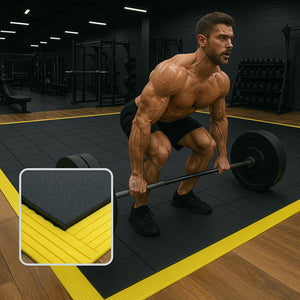
**Rubber gym tiles** typically measure 500mm x 500mm or 1000mm x 1000mm squares with interlocking edges or straight-cut borders. This format provides exceptional installation flexibility, easy replacement capability, and precise layout control for complex spaces.
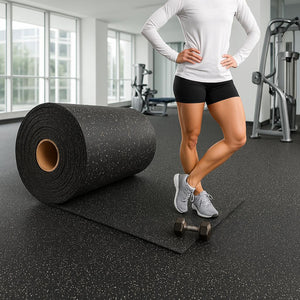
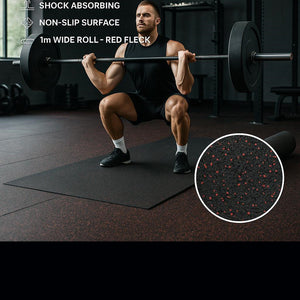
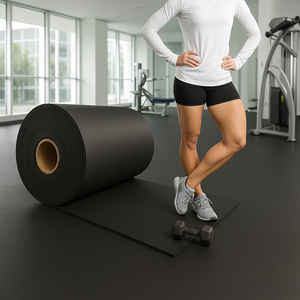
**Rubber rolls** come in continuous lengths of 10-20 metres with widths ranging from 1.0-2.0 metres. This format offers seamless coverage, minimal joints, and efficient installation for large, rectangular areas.
Understanding these fundamental differences helps identify which format aligns with your specific application requirements, installation capabilities, and long-term maintenance preferences.
Installation Comparison: Complexity and Requirements
Installation methodology represents perhaps the most significant difference between rubber tiles and rolls, affecting both DIY feasibility and professional installation requirements.
Rubber Tile Installation Process
Interlocking rubber gym tiles offer user-friendly installation suitable for DIY projects and professional installations alike.
**Tile installation advantages:**
- **Simple handling**: Individual tiles weigh 5-15kg, manageable for one person
- **Gradual installation**: Work can progress room by room or section by section
- **Error correction**: Individual tiles can be repositioned or replaced easily
- **Complex layouts**: Accommodate irregular spaces, columns, and obstacles
- **Tool requirements**: Minimal—utility knife, ruler, rubber mallet sufficient
**Tile installation process:**
- **Room preparation**: Clean subfloor, check level, establish reference lines
- **Starting point**: Begin from centre or longest straight wall
- **Tile placement**: Connect interlocking edges or position straight-edge tiles
- **Border cutting**: Measure and cut perimeter tiles to fit
- **Final inspection**: Check all connections, ensure level surface
Rubber Roll Installation Process
Premium rubber flooring rolls require more complex installation procedures but provide superior coverage efficiency for large areas.
**Roll installation advantages:**
- **Seamless coverage**: Minimal joints reduce maintenance requirements
- **Efficient large areas**: Covers substantial floor areas quickly
- **Professional appearance**: Clean, unbroken surface lines
- **Reduced joints**: Fewer potential failure points
**Roll installation challenges:**
- **Heavy handling**: Rolls weigh 50-200kg, requiring multiple people or machinery
- **Precision cutting**: Mistakes in measurement affect entire sections
- **Adhesive requirements**: Usually requires full adhesive coverage
- **Professional installation**: Complex layouts need experienced contractors
Cost Analysis: Initial Investment and Total Ownership
The financial comparison between tiles and rolls extends beyond material costs to encompass installation expenses, maintenance requirements, and replacement considerations.
Material Cost Comparison
| Format | Thickness Range | Material Cost (£/m²) | Installation Cost (£/m²) |
|---|---|---|---|
| Rubber Tiles (12mm) | 8-30mm | £25-45 | £8-15 (DIY: £0) |
| Rubber Tiles (20mm) | 8-30mm | £35-65 | £10-18 (DIY: £0) |
| Rubber Rolls (15mm) | 6-25mm | £30-50 | £15-25 |
| Rubber Rolls (20mm) | 6-25mm | £40-70 | £18-30 |
Hidden Costs and Considerations
**Rubber tile additional costs:**
- **Waste factor**: 5-10% additional material for cuts and errors
- **Edge strips**: £8-15/metre for perimeter finishing
- **Transport**: Multiple deliveries may incur additional charges
- **Storage**: Requires dry storage space before installation
**Rubber roll additional costs:**
- **Adhesive**: £3-8/m² for bonded installations
- **Professional installation**: Usually mandatory for warranty
- **Seaming materials**: Welding or taping for multi-roll installations
- **Specialised tools**: Rental costs for cutting and handling equipment
Small Space vs Large Space Suitability
The choice between tiles and rolls often depends significantly on the dimensions and configuration of your available space. Each format offers distinct advantages depending on room size and layout complexity.
Small Space Applications (Under 50m²)
**Rubber tiles excel in smaller spaces:**
- **Flexible sizing**: Accommodate irregular dimensions without waste
- **DIY installation**: Manageable project scope for homeowners
- **Gradual completion**: Install section by section over time
- **Future modifications**: Easy reconfiguration or expansion
- **Storage efficiency**: Easier to store materials before installation
**Small space tile advantages:**
- **Home gyms**: Perfect for converted bedrooms, garages, basements
- **Personal training studios**: Professional appearance with flexibility
- **Rehabilitation spaces**: Easy replacement if damaged by equipment
- **Multi-purpose rooms**: Can be partially removed for other uses
Large Space Applications (Over 100m²)
**Rubber rolls offer advantages in larger facilities:**
- **Installation efficiency**: Cover large areas quickly
- **Fewer joints**: Reduced maintenance and cleaning time
- **Professional appearance**: Seamless, unbroken surface lines
- **Cost efficiency**: Lower installation costs per square metre
- **Structural performance**: Better load distribution across subfloor
**Large space roll applications:**
- **Commercial gyms**: Professional appearance and efficiency
- **School sports halls**: Seamless surface for multiple activities
- **Corporate fitness centres**: Premium appearance and performance
- **Training facilities**: Large open areas without interruptions
Maintenance Requirements and Cleaning Efficiency
Long-term maintenance requirements differ significantly between tiles and rolls, affecting both operational costs and facility management efficiency.
Rubber Tile Maintenance
**Daily maintenance:**
- **Joint cleaning**: Requires attention to interlocking edges and seams
- **Individual tile access**: Easy cleaning around equipment
- **Spot replacement**: Damaged tiles can be replaced without affecting surrounding areas
- **Equipment repositioning**: Tiles can be temporarily lifted if needed
**Long-term maintenance benefits:**
- **Partial replacement**: Replace only damaged sections
- **Easy access**: Lift tiles to access underfloor services
- **Modular repairs**: Cost-effective maintenance program
- **Inventory management**: Keep spare tiles for quick repairs
Rubber Roll Maintenance
**Daily maintenance:**
- **Seamless cleaning**: Fewer joints simplify routine maintenance
- **Machine cleaning**: Efficient for large-area maintenance equipment
- **Reduced labour**: Less detailed work around joints and edges
- **Consistent appearance**: Uniform surface easier to maintain
**Long-term maintenance considerations:**
- **Section replacement**: Damage may require replacing entire sections
- **Professional repairs**: Seaming and patching require specialist skills
- **Higher replacement costs**: Larger areas affected by localised damage
- **Access challenges**: Underfloor services require extensive lifting
Aesthetic Considerations and Visual Impact
The visual appearance and design flexibility of your gym flooring significantly impacts user perception, facility branding, and overall professional appearance.
Design Flexibility and Customisation
**Rubber tile design advantages:**
- **Pattern creation**: Mix colours and textures for custom designs
- **Zone definition**: Different colours for different activity areas
- **Modular layouts**: Create unique patterns and borders
- **Brand integration**: Incorporate logos or colour schemes
- **Repair aesthetics**: Replacement tiles blend seamlessly
**Rubber roll design characteristics:**
- **Seamless appearance**: Clean, professional surface lines
- **Consistent colour**: No variation between pieces
- **Minimalist aesthetic**: Uninterrupted surface planes
- **Limited customisation**: Fewer options for pattern creation
- **Professional standard**: Meets commercial appearance expectations
Long-Term Appearance Maintenance
**Tile appearance over time:**
- **Consistent aging**: Individual tiles age uniformly
- **Easy refreshing**: Replace worn tiles to refresh appearance
- **Joint maintenance**: Requires attention to prevent debris accumulation
- **Colour consistency**: New replacement tiles may show colour differences
**Roll appearance longevity:**
- **Uniform aging**: Entire surface ages consistently
- **Fewer maintenance points**: Less detailed cleaning required
- **Professional appearance**: Maintains commercial standard longer
- **Replacement visibility**: Patches and repairs more noticeable
Performance Characteristics Comparison
Both formats offer excellent performance, but subtle differences may influence selection for specific applications and user requirements.
Structural Performance
**Load distribution characteristics:**
- **Tiles**: Loads concentrate on individual tile area
- **Rolls**: Loads distribute across larger continuous area
**Impact resistance:**
- **Tiles**: Damage contained to affected tile only
- **Rolls**: Impact may affect larger surface area
Safety and Performance Standards
Both formats achieve identical safety and performance standards when manufactured to the same specifications:
- **Slip resistance**: Identical surface textures and compounds
- **Shock absorption**: Performance determined by thickness and material
- **Fire ratings**: Same material composition provides equal ratings
- **Acoustic performance**: Thickness and density determine acoustic properties
Recommendation Matrix: Choosing Your Ideal Format
Use this decision matrix to determine which format best suits your specific requirements:
Choose Rubber Tiles When:
- **Room size**: Under 75m² or irregular layouts
- **Installation preference**: DIY installation desired
- **Budget considerations**: Phased installation or lower initial cost priority
- **Flexibility requirements**: Future reconfiguration or expansion planned
- **Maintenance approach**: Prefer modular replacement capability
- **Design creativity**: Want custom patterns or colour schemes
- **Access requirements**: Need occasional access to underfloor services
Quality interlocking rubber tiles provide the perfect solution for these applications, offering professional performance with DIY convenience.
Choose Rubber Rolls When:
- **Room size**: Over 100m² of regular, rectangular space
- **Professional appearance**: Seamless surface critical for image
- **High traffic**: Commercial facility with intensive daily use
- **Maintenance efficiency**: Minimise ongoing cleaning requirements
- **Permanent installation**: Long-term installation without changes
- **Equipment loads**: Very heavy or frequently moved equipment
- **Professional standards**: Commercial or institutional requirements
Hybrid Solutions
Some facilities benefit from combining both formats:
- **Rolls for main areas**: Large, open workout spaces
- **Tiles for specific zones**: Weight areas, functional training spaces
- **Transition management**: Professional installation ensures seamless integration
- **Cost optimization**: Balance performance with budget constraints
Installation Planning and Project Management
Successful installation requires thorough planning regardless of format choice. Understanding the process helps ensure optimal results and prevents costly mistakes.
Pre-Installation Planning
**Site assessment requirements:**
- **Subfloor evaluation**: Structural capacity, level, moisture content
- **Environmental conditions**: Temperature, humidity, ventilation
- **Access considerations**: Delivery routes, installation access
- **Timeline planning**: Installation schedule and facility downtime
**Material planning:**
- **Accurate measurements**: Professional measuring recommended
- **Waste calculations**: 5-10% additional for tiles, 3-7% for rolls
- **Acclimatisation time**: 24-48 hours at installation temperature
- **Storage requirements**: Dry, controlled temperature environment
Professional vs DIY Installation
**DIY suitability assessment:**
- **Tiles under 50m²**: Generally suitable for competent DIYers
- **Simple rectangular layouts**: Straightforward tile installations
- **Basic tools available**: Standard household tools sufficient
- **Time availability**: Allow 2-3 days for first-time installers
**Professional installation recommended:**
- **Rolls any size**: Complex handling and adhesive requirements
- **Commercial installations**: Warranty and performance requirements
- **Complex layouts**: Multiple rooms, obstacles, custom patterns
- **Time constraints**: Professional efficiency saves facility downtime
Frequently Asked Questions
Can I mix rubber tiles and rubber rolls in the same facility?
Yes, many facilities use this hybrid approach effectively. Use rolls for large, open areas and tiles for specific zones like weight areas or functional training spaces. Ensure proper transition strips between different formats and maintain consistent thickness for safety.
Which format is better for home gyms with multiple uses?
Rubber tiles offer superior flexibility for multi-purpose home spaces. They can be partially removed for other activities, reconfigured as needs change, and expanded gradually. The ability to replace individual damaged tiles also makes them practical for varied home use.
How do I calculate waste factors for each format?
For tiles, add 5-10% for cuts and potential damage during installation. For rolls, add 3-7% depending on room complexity. Complex layouts with many obstacles may require 10-15% waste factor regardless of format. Professional measuring reduces waste significantly.
Which format provides better value for commercial gyms?
For large commercial spaces (500m²+), rolls typically provide better value through reduced installation costs and lower maintenance requirements. Smaller commercial facilities (under 200m²) may benefit from tile flexibility and lower initial investment. Consider total cost of ownership over 15-20 years.
What happens if I need to access underfloor services?
Tiles offer significant advantages for underfloor access. Individual tiles can be lifted without affecting surrounding areas. Rolls require cutting and professional repair/replacement of affected sections. If frequent access is anticipated, tiles provide more practical and cost-effective solutions.
Ready to Choose Your Perfect Rubber Flooring Format?
Explore our complete range of rubber gym tiles and rubber rolls. Whether you need DIY-friendly tiles for your home gym or professional-grade rolls for commercial installation, we have the ideal solution for your space.
Shop Gym Flooring CollectionShop Rubber Gym Tiles & Rubber Rolls
- Rubber Gym Tiles — interlocking tiles, easy DIY installation, ideal for home gyms
- Rubber Gym Flooring Rolls — seamless rolls for commercial gyms and large spaces
- All Rubber Gym Flooring — browse our complete rubber flooring range
