




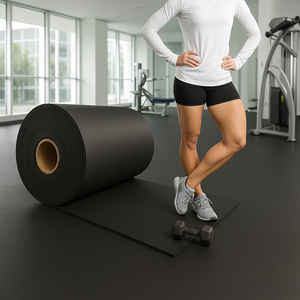


How to Build a Home Gym Floor: Complete UK Guide (2026)
Building a home gym floor in the UK requires careful planning, proper preparation, and understanding of building regulations and best practices.
Whether you're converting a garage, basement, spare room, or dedicated space, the flooring foundation determines your gym's functionality, safety, and longevity.
This comprehensive guide walks you through every step of creating a professional-quality home gym floor that meets UK standards and supports your fitness goals for decades.
Planning Your Home Gym Floor: Essential Considerations
Before breaking ground or purchasing materials, thorough planning prevents costly mistakes and ensures optimal results. Your home gym floor planning should address structural considerations, intended use, budget constraints, and long-term goals.
**Key planning factors include:**
- **Room location and structural capacity**: Ground floor, upper floor, or basement
- **Intended activities**: Cardio, weightlifting, functional training, or mixed use
- **Equipment loads**: Treadmill weight, rack systems, free weights
- **Noise considerations**: Impact on neighbours and household
- **Moisture and ventilation**: Particularly crucial for garages and basements
- **Budget allocation**: Materials, labour, tools, and contingency funds
Professional planning at this stage saves significant time and money during construction whilst ensuring your finished gym meets all requirements.
UK Building Regulations and Home Gym Requirements
Understanding UK building regulations ensures your home gym floor meets legal requirements and maintains your property insurance validity. While home gyms don't typically require planning permission, certain modifications may need Building Control approval.
Structural Considerations Under Building Regulations
**Load-bearing requirements**: UK building standards specify minimum floor loading capacities. Standard domestic floors support 1.5kN/m² (approximately 150kg/m²) distributed load. Heavy gym equipment may exceed these limits, requiring structural assessment.
**Floor loading calculations:**
- **Treadmills**: 120-200kg concentrated load
- **Multi-gym units**: 150-300kg distributed load
- **Olympic barbells with plates**: 300-500kg concentrated load
- **Power racks**: 200-400kg when loaded
If your gym exceeds standard loading limits, consult a structural engineer. This is particularly important for upper-floor installations where load distribution becomes critical for safety.
Fire Safety and Building Control
Home gym conversions must maintain fire safety standards:
- **Escape routes**: Maintain access to exits
- **Fire detection**: Smoke alarms as per current regulations
- **Electrical safety**: RCD protection for new circuits
- **Ventilation**: Adequate air change rates
Subfloor Preparation: The Foundation of Success
Proper subfloor preparation determines your gym floor's longevity and performance. UK properties present various subfloor conditions, each requiring specific preparation approaches.
Concrete Subfloor Preparation
Concrete subfloors are common in UK garages, basements, and ground-floor extensions. These provide excellent stability but require proper preparation for optimal results.
**Concrete preparation steps:**
- **Moisture testing**: Use electronic moisture meter or plastic sheet test
- **Level assessment**: Check for high/low spots using 2m spirit level
- **Surface preparation**: Clean thoroughly, repair cracks, remove loose material
- **Levelling compound**: Apply self-levelling screed for uneven areas
- **Damp-proof membrane**: Essential in basements and ground-floor applications
- **Primer application**: Ensures adhesion for glued flooring systems
Allow 24-48 hours drying time between preparation stages. Rushing this process compromises the entire installation.
Suspended Timber Floor Preparation
Many UK homes feature suspended timber floors, particularly in older properties. These require specific preparation to ensure stability and prevent movement.
**Timber floor preparation process:**
- **Structural assessment**: Check joist condition and spacing
- **Board inspection**: Identify loose, damaged, or squeaky boards
- **Fixing improvements**: Additional screws to reduce movement
- **Levelling**: Sand high spots, pack low areas
- **Subfloor overlay**: 18mm exterior-grade plywood or OSB
- **Moisture barrier**: Polythene sheet with sealed joints
The overlay provides a stable, consistent surface for gym flooring installation whilst distributing loads across multiple joists.
Measuring and Layout: Precision Planning
Accurate measuring and strategic layout planning minimise waste, reduce costs, and ensure professional-looking results. UK properties often feature irregular shapes requiring careful planning.
Measuring Techniques
**Essential measuring tools:**
- **Steel tape measure**: 5m minimum for accuracy
- **Spirit level**: 2m length for checking levels
- **Square**: Ensures 90-degree corners
- **Chalk line**: Marks straight reference lines
- **Laser measure**: Precise measurements in large spaces
**Measuring process:**
- **Overall dimensions**: Length and width at multiple points
- **Diagonal measurements**: Confirms square corners
- **Obstacle mapping**: Pillars, built-ins, utility connections
- **Level checking**: Identify high and low spots
- **Door clearances**: Account for flooring thickness
Layout Planning Strategy
Strategic layout reduces waste and creates professional appearance:
**Centre-out method**: Start from room centre, working outward. This balances border tiles and creates symmetrical appearance.
**Wall-to-wall method**: Begin at longest, straightest wall. Simpler for beginners but may create uneven borders.
**Material-specific considerations**: Interlocking rubber tiles require different layout planning than roll goods or adhesive systems.
Installation Methods: Step-by-Step Procedures
Different flooring materials require specific installation techniques. Understanding these methods ensures successful installation and optimal long-term performance.
Interlocking Tile Installation
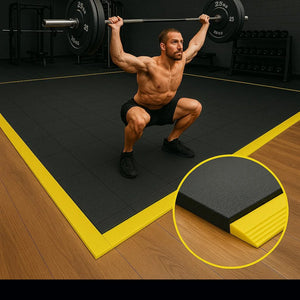
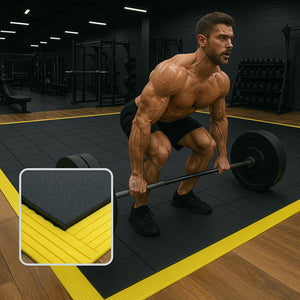
Interlocking systems offer DIY-friendly installation with professional results. High-quality interlocking rubber mats provide excellent performance with straightforward installation.
**Interlocking tile installation steps:**
- **Acclimatisation**: Allow tiles to reach room temperature (24 hours minimum)
- **Starting point**: Establish centre line or straight reference wall
- **First row**: Install carefully, ensuring straight alignment
- **Interlocking pattern**: Connect tabs firmly, check alignment frequently
- **Border cutting**: Measure and cut precisely using sharp utility knife
- **Final inspection**: Check all connections, fix any loose areas
Adhesive Installation Methods
Permanent installations using adhesive provide maximum stability for heavy equipment areas. This method suits commercial-grade applications and high-load zones.
**Adhesive installation process:**
- **Adhesive selection**: Choose appropriate type for subfloor and flooring
- **Application**: Spread evenly using notched trowel
- **Open time management**: Work within adhesive working time
- **Flooring placement**: Position carefully, avoid repositioning
- **Rolling**: Use 100kg roller to ensure full adhesion
- **Curing time**: Avoid traffic for specified period
Floating Floor Systems
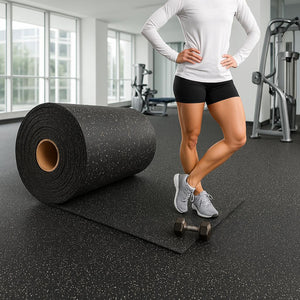
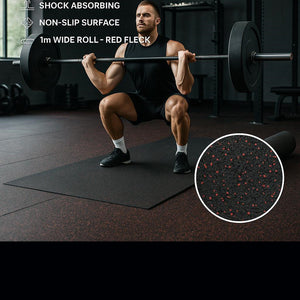
Roll goods and large-format materials often install as floating floors, requiring minimal adhesive and offering future removal flexibility.
Premium rubber flooring rolls exemplify floating installation systems, providing seamless coverage with professional results.
Tool Requirements and Equipment List
Successful home gym floor installation requires appropriate tools and equipment. Investing in quality tools ensures better results and may be cost-effective versus hiring professionals.
Essential Hand Tools
- **Sharp utility knives**: Multiple blades for clean cuts
- **Steel rulers**: 1m and 2m lengths for straight cuts
- **Trowels**: Notched for adhesive application
- **Rubber mallets**: Gentle tile positioning
- **Knee pads**: Comfort during floor-level work
Power Tools and Equipment
- **Circular saw**: Precise cuts in thick materials
- **Jigsaw**: Complex cuts around obstacles
- **Drill/driver**: Subfloor preparation
- **Oscillating tool**: Undercutting door frames
- **Floor roller**: 50-100kg for adhesive installations
Measuring and Layout Tools
- **Long tape measures**: 8m+ for large rooms
- **Chalk line**: Straight reference lines
- **Laser level**: Precise levelling over distance
- **Speed square**: 90-degree angle verification
- **Moisture meters**: Subfloor condition assessment
Cost Breakdown: Materials and Labour Analysis
Understanding the complete cost structure helps budget effectively and make informed decisions about DIY versus professional installation.
Material Costs per Square Metre (2026 UK Prices)
| Flooring Type | Material Cost (£/m²) | Installation Difficulty | Professional Labour (£/m²) |
|---|---|---|---|
| EVA Foam Mats | £8-18 | Easy (DIY) | £5-10 |
| Rubber Tiles (12mm) | £25-40 | Moderate (DIY) | £8-15 |
| Rubber Tiles (17mm+) | £35-60 | Moderate (DIY) | £10-18 |
| Rubber Rolls | £30-55 | Difficult (Professional) | £15-25 |
| Commercial Grade | £45-80 | Professional Only | £20-35 |
Additional Cost Considerations
**Subfloor preparation costs:**
- **Self-levelling compound**: £3-8/m²
- **Damp-proof membrane**: £2-5/m²
- **Plywood overlay**: £15-25/m²
- **Professional assessment**: £200-500
**Tool and equipment costs (purchase):**
- **Basic hand tools**: £50-150
- **Power tools**: £200-800
- **Specialised equipment**: £100-400
- **Tool hire alternative**: £20-60/day
Home Gym Floor Project Timeline
Realistic timeline planning ensures proper preparation and prevents rushed work that compromises quality. UK weather and seasonal factors may affect certain installation steps.
Planning and Preparation Phase (1-2 weeks)
- **Days 1-3**: Room assessment, measuring, planning
- **Days 4-7**: Material selection, quotation gathering
- **Days 8-10**: Tool acquisition, material ordering
- **Days 11-14**: Delivery scheduling, workspace preparation
Installation Phase (2-5 days)
- **Day 1**: Subfloor preparation, cleaning, repairs
- **Day 2**: Levelling, primer application (if required)
- **Day 3**: Material acclimatisation, layout marking
- **Day 4-5**: Installation, cutting, finishing
Curing and Setup Phase (1-7 days)
- **Immediate**: Final inspection, cleanup
- **24-48 hours**: Adhesive curing (if applicable)
- **3-7 days**: Equipment installation, testing
Common Mistakes and How to Avoid Them
Learning from common installation mistakes prevents costly errors and ensures professional results. These frequent issues can compromise both immediate results and long-term performance.
Subfloor Preparation Errors
- **Insufficient moisture testing**: Can cause adhesive failure
- **Inadequate levelling**: Creates uneven surfaces and premature wear
- **Skipping primer**: Reduces adhesion in bonded systems
- **Poor cleaning**: Contaminants prevent proper adhesion
Layout and Installation Mistakes
- **Inadequate acclimatisation**: Materials may expand/contract after installation
- **Poor starting references**: Compounds errors throughout installation
- **Incorrect cutting techniques**: Wastes material and creates poor appearance
- **Rushed installation**: Leads to gaps, misalignment, and callbacks
Take time for each step. Quality installation takes patience but provides decades of reliable service.
Maintenance and Long-Term Care
Proper maintenance protects your investment and ensures optimal performance throughout your gym floor's lifespan. Quality rubber gym flooring requires minimal maintenance when properly installed and cared for.
Daily and Weekly Maintenance
- **Equipment placement**: Use protective mats under heavy machines
- **Spill cleanup**: Address moisture immediately to prevent damage
- **Regular cleaning**: Sweep/vacuum debris, damp mop as needed
- **Inspection routine**: Check for loose areas, damage, wear patterns
Monthly and Seasonal Maintenance
- **Deep cleaning**: Thorough scrubbing with appropriate cleaners
- **Joint inspection**: Check interlocking connections, reseat if necessary
- **Equipment review**: Rotate machines to distribute wear patterns
- **Environmental monitoring**: Check humidity, temperature, ventilation
Frequently Asked Questions
Do I need planning permission for a home gym floor?
Generally, no planning permission is required for internal home gym installations. However, if structural modifications are needed or you're converting outbuildings, consult your local planning authority. Building Control approval may be required for significant structural changes.
Can I install gym flooring over underfloor heating?
Yes, but choose compatible materials and follow manufacturer guidelines. Rubber flooring typically handles underfloor heating well, whilst some synthetic materials may not. Ensure the heating system doesn't exceed material temperature limits (usually 27°C surface temperature).
What's the minimum ceiling height for a home gym?
While not a flooring consideration, UK Building Regulations specify minimum 2.3m ceiling height for habitable rooms. For gym use, 2.5-3m is preferable for overhead exercises and equipment clearance. Consider flooring thickness when calculating final ceiling height.
How do I handle moisture in garage or basement gyms?
Install proper damp-proof membranes under flooring, ensure adequate ventilation, and use moisture-resistant materials. Consider dehumidification in problem areas. Address any existing moisture issues before flooring installation.
Can I remove and relocate interlocking gym flooring?
Yes, quality interlocking systems like our rubber tiles can be disassembled and relocated. This makes them ideal for renters or those who may move. Store tiles flat and avoid extreme temperature changes during storage.
Ready to Build Your Perfect Home Gym Floor?
Get started with our professional-grade gym flooring solutions designed specifically for UK homes. From DIY-friendly interlocking tiles to professional roll systems, we have everything you need for a successful installation.
Shop Gym Flooring Collection