






Best Rubber Gym Mats UK 2026: Complete Buyer's Guide & Product Reviews
Best Rubber Gym Mats UK 2026: Top Products Reviewed
Rubber gym mats are the foundation of any great home or commercial gym. With hundreds of options available in the UK, choosing the right mat can feel overwhelming. This expert guide covers the best rubber gym mats for every use case — from compact home gym setups to full commercial fitness centre installations — with specific product recommendations, thickness guides, and pricing for 2026.
What Are Rubber Gym Mats?
Rubber gym mats are floor protection products made from high-density natural or recycled rubber. They are designed to protect sub-floors from the weight and impact of gym equipment, provide a non-slip training surface, reduce vibration and noise, and create a more comfortable workout environment. Unlike carpet or foam, rubber mats are highly durable, moisture-resistant, and easy to clean — making them the preferred choice for serious home and commercial gym installations across the UK.
Types of Rubber Gym Mats Available in the UK
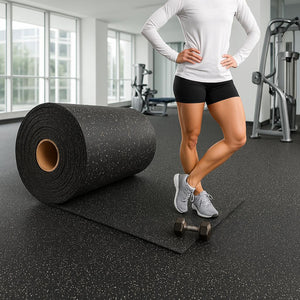
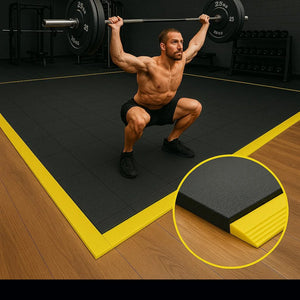
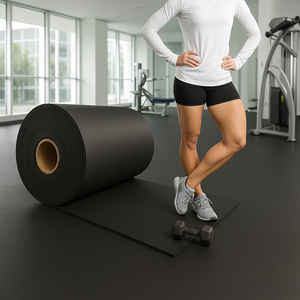
There are four main types of rubber gym mats available in the UK. Interlocking rubber tiles (500mm x 500mm or 1m x 1m) are modular panels with puzzle-edge connectors that lock together without adhesive. They're versatile, removable, and suitable for most gym floor applications. Rubber gym rolls are supplied on rolls and cut to length, creating a near-seamless floor for large open areas like cardio zones and studio spaces. Heavy-duty platform mats are extra-thick (40mm–100mm) rubber panels designed specifically to absorb the impact of heavy barbell drops in Olympic lifting and CrossFit areas. Non-interlocking rubber tiles are single, individual mats placed under specific pieces of equipment to provide targeted floor protection without full floor coverage.
Best Rubber Gym Mats for Home Gyms UK
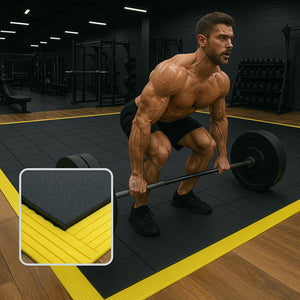
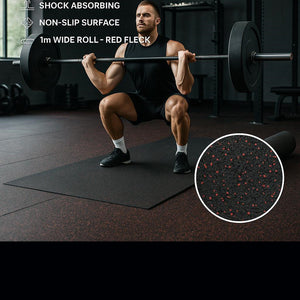
For home gyms, the 20mm interlocking rubber tile is consistently the best-rated option. At 1m x 1m per tile, covering a typical 15–25 square metre home gym takes 17–28 tiles. The 20mm thickness provides: adequate protection for the sub-floor under all standard home gym equipment, sufficient cushioning for free weights and resistance training, meaningful reduction in impact noise and vibration, and a stable, non-slip surface for all training activities. Our 20mm tiles are available in standard black and black with coloured EPDM speckle patterns and include matching ramp edge and corner pieces.
Best Rubber Gym Mats for Commercial Gyms UK
Commercial gyms require higher-specification rubber mats than home gyms. For commercial free-weight areas, 30mm heavy-duty rubber tiles are the standard — they're rated for higher static loads, have reinforced interlocking edges that withstand constant use, and can be individually replaced without relaying the entire floor when sections wear out. For commercial cardio areas, 6mm–8mm rubber rolls provide a durable, hygienic, and cost-effective surface that handles the constant abrasion of treadmill and elliptical use. For CrossFit and functional training zones, 30mm tiles or purpose-built drop zone mats with 50mm+ thickness protect the floor and equipment from daily high-impact use.
Rubber Gym Mat Thickness Guide UK
Selecting the correct thickness is the most important decision when buying rubber gym mats. 6–10mm rubber mats or rolls are suitable for cardio equipment, treadmills, and stretching areas. A 15mm thickness is adequate for light free weights and yoga/pilates studios. The 20mm thickness is the recommended minimum for general gym use with free weights and resistance training — this is the most popular choice for UK home gyms. A 25mm thickness is appropriate for heavier free weights and regular moderate barbell drops (under 80kg). The 30mm thickness is the professional standard for CrossFit, Olympic weightlifting, and powerlifting platforms, and for any area with frequent heavy drops above 80kg.
Rubber Gym Mats vs Foam Mats — Which Is Better?
Rubber and foam mats serve different purposes. Rubber is the better choice for: free-weight zones, resistance training areas, CrossFit and Olympic lifting areas, any area with heavy equipment, and commercial gym use. Foam (EVA) mats are better for: yoga and pilates studios, stretching zones, aerobics and group fitness areas, children's play spaces, and anywhere comfort over heavy-duty protection is the priority. Most well-equipped gyms use both — rubber in equipment zones and foam in studio or warm-up areas.
How to Buy Rubber Gym Mats UK — Key Questions to Ask
Before purchasing, answer these questions: What is the total floor area to be covered? What types of training will be conducted on this floor? What weight is the heaviest piece of equipment that will be placed on the floor? Is noise reduction a priority? Do I need the floor to be removable and reinstallable? What is my budget per square metre? Once you have these answers, GymFlooringUK's team can recommend the exact product that meets your needs. Contact us for free personalised advice before placing your order.
Rubber Gym Mat Prices UK 2026
Prices for rubber gym mats in the UK in 2026: 15mm interlocking rubber tiles from £9.99 per square metre. 20mm interlocking rubber tiles from £14.99 per square metre. 30mm premium interlocking tiles from £22.99 per square metre. Rubber gym rolls from £4.50 per square metre. Heavy-duty platform mats from £45 per unit. All prices include UK VAT. Free delivery on orders over £150. Samples available before purchase.
