


Thickness Guide
Which thickness do I need?
4–6mm — Cardio, treadmills, yoga. Light floor protection.
10–12mm — Home gyms, dumbbells up to 30kg. Great all-rounder. Most Popular
16–17mm — Commercial gyms, heavy free weights, CrossFit.
20–30mm — Olympic lifting, deadlift platforms. Maximum protection.
Not sure? Ask our experts
✔️ EN 13893 Certified | ✔️ 900 kg/m³ Density | ✔️ 70% Impact Absorption | ✔️ CE & REACH
Purpose-built for weight rooms, dumbbell areas and strength training zones. 16mm at 900 kg/m³ density absorbs 70% of impact force from dropped dumbbells, protects your subfloor and reduces noise transmission — the complete weight room flooring solution.
Why These Tiles?
- ✅ 70% impact absorption — protects concrete subfloor from cracking under repeated drops
- ✅ 900 kg/m³ density — resists permanent indentation under heavy dumbbell racks and machines
- ✅ EN 13893 slip certified — safe underfoot during dynamic training movements
- ✅ 4 tiles per m² — flexible layout around racks, cable machines and dumbbell storage
- ✅ Individual tile replacement in a drop zone — no need to relay the full floor
| Specifications | |
|---|---|
| Thickness | 16mm |
| Tile Size | 500mm × 500mm |
| Coverage | 0.25m² per tile (4 tiles = 1m²) |
| Material | Recycled SBR Rubber |
| Density | 900 kg/m³ |
| Slip Resistance | EN 13893 certified |
| Impact Absorption | 70% force reduction |
| Noise Reduction | 65% sound dampening |
| Certifications | CE Certified, REACH Compliant |
| Installation | Puzzle interlock — no adhesive |
How Many Tiles Do You Need?
Each tile covers 0.25m² (500mm × 500mm). You need 4 tiles per m². Measure your room, multiply length × width, add 10% for cuts.
| Room Size | Area | Tiles (inc. 10%) |
|---|---|---|
| 3m × 3m | 9 m² | 40 tiles |
| 4m × 5m | 20 m² | 88 tiles |
| 6m × 6m | 36 m² | 160 tiles |
| 8m × 10m | 80 m² | 352 tiles |
Installation — No Adhesive, No Contractor
Tiles press together with the 4-sided puzzle edge. No adhesive, no tools, no specialist installer. A 20m² floor takes one person approximately 2 hours. Works on concrete, screed or timber. Do not install on carpet.
✔️ Free UK mainland delivery on all orders. Same-day dispatch before 2pm.
See All Rubber Gym Tiles
- 16mm Standard Interlocking Tiles
- 20mm Heavy Duty Tiles — for heavier drops
- 30mm Olympic Lifting Tiles — 200kg+ rated
Frequently Asked Questions
Q: Are 16mm tiles thick enough for a dedicated weight room with heavy barbells and plates?
A: 16mm is the standard specification for weight rooms used for rack-based training, dumbbell work, and plate-loaded machines. The 70% impact absorption and 900 kg/m³ density handle the static weight of loaded barbells and racks, plus controlled dumbbell drops. For a dedicated Olympic lifting zone with repeated overhead drops, a thicker 20mm+ platform is recommended for that specific area.
Q: Will the tiles stay flat under the static weight of squat racks and loaded barbells?
A: Yes. At 900 kg/m³ density, these tiles resist permanent compression under static loads from squat racks, power cages, and leg press machines. Lower-density foam tiles can 'dish' under rack feet over time — the high-density rubber in these tiles maintains its profile under sustained point loads.
Q: How do I calculate the number of tiles needed for my weight room floor?
A: Each 500mm × 500mm tile covers 0.25m². You need 4 tiles per square metre. Measure your weight room floor area in m², multiply by 4, and add 5–10% for border cuts. For a 6m × 8m weight room (48m²), you'd need approximately 192 tiles plus a small allowance for edges.
Q: Are the tiles slip-resistant — important for heavy lifts like deadlifts and rows?
A: Yes — EN 13893 slip resistance certification means the surface maintains grip under foot during heavy lifts, even with chalk or sweat present. The textured rubber surface provides traction in lifting shoes, flat-soled shoes, and bare feet, supporting safe execution of deadlifts, rows, and squats.
Q: How does the noise reduction work — important for weight rooms in commercial buildings?
A: The 16mm rubber tiles deliver 65% noise reduction versus bare concrete, with 70% impact absorption absorbing the energy from dropped weights and loaded barbell movements. For weight rooms on upper floors or in multi-tenant buildings, this significantly reduces noise and vibration transmission to spaces below.
Q: What maintenance do weight room rubber tiles need?
A: Minimal. Sweep regularly to remove chalk and debris, and mop weekly with a pH-neutral cleaner. The dense rubber surface (900 kg/m³) doesn't absorb liquid, making cleaning straightforward. Inspect tile joins periodically — if a tile shifts under heavy rack movement, simply press it back into the interlocking join.
Need Advice? Speak to a Flooring Specialist
Not sure which thickness, format or quantity is right for your project? Our flooring specialists are here to help — commercial quotes, sample requests and installation advice all available.
Trusted By Leading Organisations

















🧮 Flooring Calculator
Enter your room size and pick a product to see exactly what you need.


Customers Also Bought
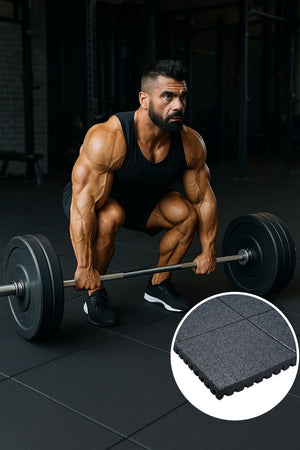 SALE
SALE30mm Rubber Gym Tiles | Olympic Lifting & CrossFit |...
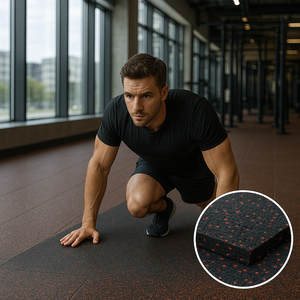 SALE
SALEHeavy-Duty Rubber Gym Flooring Rolls UK | Commercial...
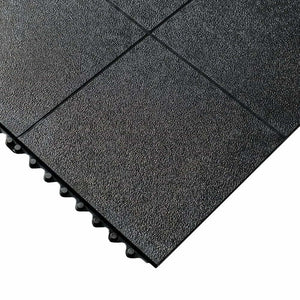 SALE
SALE17mm Interlocking Rubber Gym Mats | 80kg Drop Rated ...
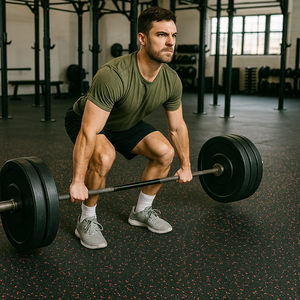 SALE
SALEHeavy-Duty Rubber Gym Flooring Rolls UK | Ultimate F...
Specify Your Gym Flooring With Confidence
Experience the Quality
Before You Commit
We send you a complimentary material sample so you can assess thickness, texture, and grip in your own space. No obligation. No cost.