


Thickness Guide
Which thickness do I need?
4–6mm — Cardio, treadmills, yoga. Light floor protection.
10–12mm — Home gyms, dumbbells up to 30kg. Great all-rounder. Most Popular
16–17mm — Commercial gyms, heavy free weights, CrossFit.
20–30mm — Olympic lifting, deadlift platforms. Maximum protection.
Not sure? Ask our experts
✔️ 20mm Heavy Duty Rubber | ✔️ EN 13893 / R10 Certified | ✔️ CE & REACH
Supporting the full cycle of Olympic weightlifting preparation — 20mm at 400kg/m² provides excellent platform support for rack work, moderate pull training and all non-drop barbell preparation. For dedicated drop zones, pair with 30mm tiles or a lifting platform.
Why Choose These Tiles?
- ✅ 400kg/m² static rated — supports all Olympic lifting racks and preparation equipment
- ✅ 1m² per tile — fast coverage of large lifting hall floors
- ✅ R10 slip certified — secure footing for clean approaches and jerk recoveries
- ✅ CE & REACH certified — meets institutional and commercial facility requirements
- ✅ Step up to 30mm for dedicated drop zones requiring repeated barbell drop protection
| Specifications | |
|---|---|
| Thickness | 20mm |
| Tile Size | 1000mm × 1000mm (1m²) |
| Coverage | 1m² per tile |
| Material | High-density rubber |
| Density | 1.1–1.3 g/cm³ |
| Static Load | 400 kg/m² |
| Slip Resistance | R10 — wet and dry |
| Certifications | CE Certified, REACH Compliant |
| Installation | Butt-jointed — no adhesive |
How Many Tiles Do You Need?
Each tile covers 1m². Tile count = room area in m² + 10% waste.
| Area | m² | Tiles (inc. 10%) |
|---|---|---|
| 4m × 5m gym | 20 m² | 22 tiles |
| 6m × 8m studio | 48 m² | 53 tiles |
| 8m × 10m commercial | 80 m² | 88 tiles |
✔️ Free UK mainland delivery on all orders. Same-day dispatch before 2pm.
Complete Range
- 16mm Tiles — general weights areas
- 20mm Tiles — heavy free weights, CrossFit
- 30mm Tiles — Olympic lifting, 200kg+ drops
Frequently Asked Questions
Q: Are these tiles designed to handle the impact of Olympic weightlifting — snatch and clean & jerk?
A: Yes. These 20mm Olympic weightlifting rubber tiles are engineered for the extreme shock loads generated during snatch and clean & jerk lifts. With a 400kg/m² static load rating and high-density rubber composition (1.1–1.3 g/cm³), they absorb the impact of heavy barbell drops and protect both the barbell plates and your subfloor from damage.
Q: What is the minimum tile thickness recommended for an Olympic weightlifting platform?
A: For Olympic weightlifting, 20mm is the standard minimum thickness for rubber flooring. This provides adequate shock absorption for barbell drops while maintaining a stable platform for lifters. For competition-level platforms or very heavy drops (over 200kg), layering two tiles (total 40mm) in the drop zones is sometimes used.
Q: How do I build an Olympic lifting platform using these tiles?
A: A standard Olympic lifting platform is typically 2.4m × 2.4m. Lay a base layer of 18–20mm plywood, then arrange the rubber tiles on top using the butt-joint system. Each tile covers 1m², so a 2.4m × 2.4m platform requires approximately 6 tiles with edge cuts. The plywood base adds rigidity and the rubber tiles absorb the drop impact.
Q: Will these tiles protect my barbell and plates when dropped from overhead?
A: These tiles provide significant protection for barbells and plates during controlled drops. The rubber cushions the impact and prevents metal-to-metal damage. However, for regularly dropping very heavy loads (150kg+) from full overhead height, a deeper rubber layer in the specific drop zone — either thicker tiles or a doubled layer — is advisable for maximum equipment protection.
Q: Are these tiles CE certified for use in competition or affiliated weightlifting facilities?
A: Yes. These tiles are CE marked and REACH compliant. For IWF-affiliated competition platforms, the specific platform construction (including wood layer and rubber spec) must meet federation guidelines. These tiles form an excellent flooring solution for training facilities and club environments, though official competition platforms may have additional requirements specified by the relevant national federation.
Q: Do these tiles require adhesive to stay in place during dynamic barbell movements?
A: For most training installations, the butt-joint system keeps tiles stable without adhesive. However, in high-intensity Olympic weightlifting environments where bars are regularly dropped, we recommend adhesive along the perimeter tiles and at seams within the drop zone. This prevents tiles from creeping apart under repeated impact forces.
Need Advice? Speak to a Flooring Specialist
Not sure which thickness, format or quantity is right for your project? Our flooring specialists are here to help — commercial quotes, sample requests and installation advice all available.
Trusted By Leading Organisations

















🧮 Flooring Calculator
Enter your room size and pick a product to see exactly what you need.


Customers Also Bought
 SALE
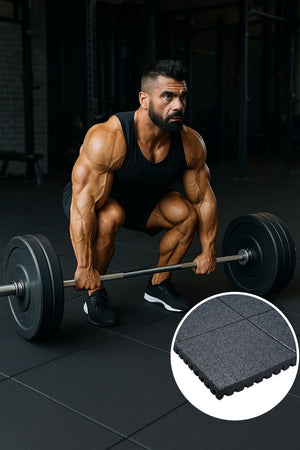
SALE30mm Rubber Gym Tiles | Olympic Lifting & CrossFit |...
 SALE
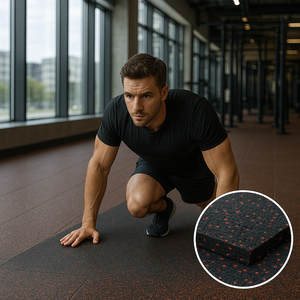
SALEHeavy-Duty Rubber Gym Flooring Rolls UK | Commercial...
 SALE
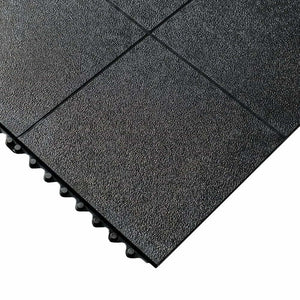
SALE17mm Interlocking Rubber Gym Mats | 80kg Drop Rated ...
 SALE
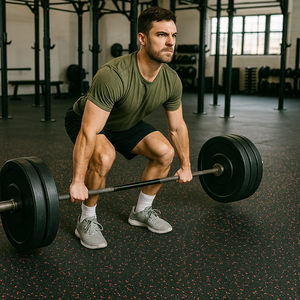
SALEHeavy-Duty Rubber Gym Flooring Rolls UK | Ultimate F...
Specify Your Gym Flooring With Confidence
Experience the Quality
Before You Commit
We send you a complimentary material sample so you can assess thickness, texture, and grip in your own space. No obligation. No cost.