






✔️ EN 13893 Certified | ✔️ 915mm × 915mm (3ft × 3ft) | ✔️ CE & REACH | ✔️ Yellow & Black Ramps Available
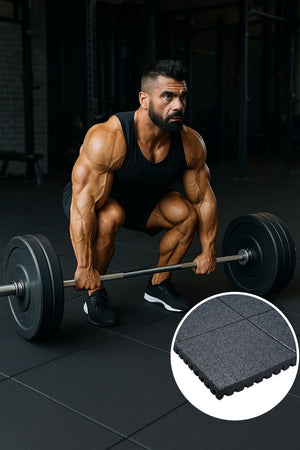
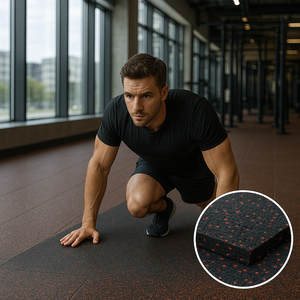
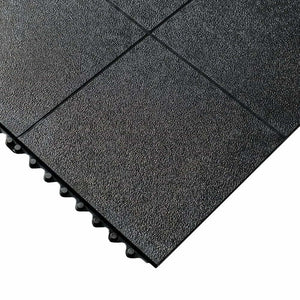
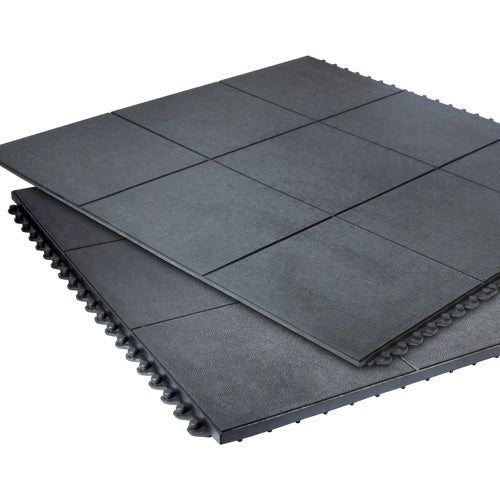
The 16mm rubber gym mat is the established UK commercial format — 36 inch × 36 inch (915mm × 915mm), the size that has been specified for gym floors across the UK for over 20 years. Built from high-density recycled SBR rubber, these mats provide reliable impact protection, anti-slip performance and acoustic dampening for free weights areas, functional training zones and commercial fitness facilities.
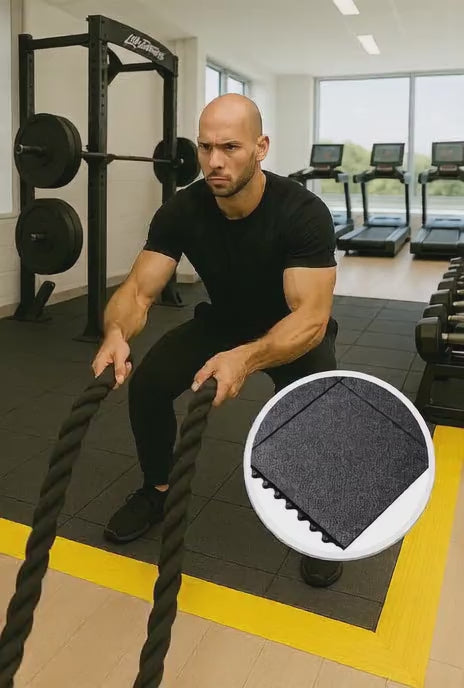
The 915mm format handles complex room shapes, equipment bases and obstacle-heavy spaces better than 1m² tiles, while covering area significantly faster than 500mm tiles. At approximately 14kg per mat, these are manageable solo — unlike heavier 1m² formats. Available with yellow or black safety ramp edges for professional perimeter finishing.
| Product | |
|---|---|
| Dimensions | 915mm × 915mm (36 inch × 36 inch / 3ft × 3ft) |
| Thickness | 16mm |
| Coverage per Mat | ~0.84m² (approx. 1.19 mats per m²) |
| Weight per Mat | ~14kg |
| Colour | Black |
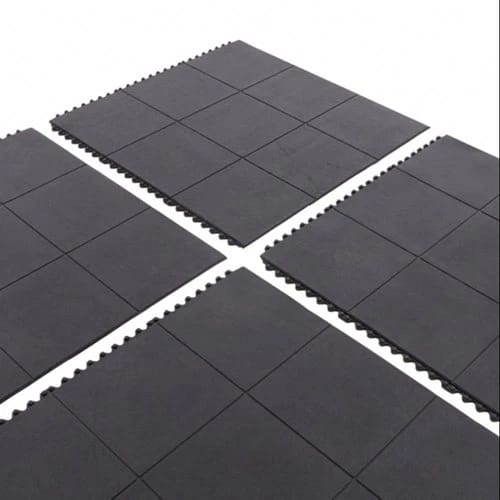
| Edge Profile | Interlocking puzzle edge |
| Material & Certifications | |
|---|---|
| Material | High-density recycled SBR Rubber |
| Slip Resistance | EN 13893 certified — wet and dry |
| Certifications | CE Certified, REACH Compliant |
| Installation | Interlocking puzzle edge — no adhesive required |
Any exposed mat edge creates a 16mm step at the perimeter — a trip hazard in commercial environments. Ramped safety edges provide a smooth, professional transition from mat height to the surrounding floor.
Each mat covers approximately 0.84m². Multiply your floor area (m²) by 1.2 to get mat count including 10% waste allowance.
| Area | m² | Mats (inc. 10%) |
|---|---|---|
| Garage gym (3m × 3m) | 9 m² | ~11 mats |
| Garage gym (4m × 5m) | 20 m² | ~24 mats |
| PT studio (6m × 6m) | 36 m² | ~44 mats |
| Commercial weights floor (6m × 8m) | 48 m² | ~58 mats |
| CrossFit zone (8m × 10m) | 80 m² | ~96 mats |
We supply PT studios, CrossFit boxes, leisure centres, school sports facilities and commercial gym operators at trade pricing. Contact us with your floor area for a quote within 24 hours.
Q: What is the coverage of a 36 inch (915mm) rubber gym mat?
A: Each mat covers approximately 0.84m² (915mm × 915mm = 0.838m²). You need approximately 1.19 mats per m². Multiply your floor area by 1.2 to get mat count with 10% waste allowance.
Q: Can these mats be used in a commercial gym?
A: Yes. EN 13893 slip resistance certification, CE marking and REACH compliance satisfy commercial premises requirements. The 3ft × 3ft format has been the UK commercial gym standard for over 20 years.
Q: What is the difference between yellow and black ramp edges?
A: Both are identical 1m bevelled ramps providing a smooth 16mm-to-floor transition. Yellow is high-visibility — standard where safety colour coding is required. Black matches the mat for a seamless aesthetic.
Q: Why choose 915mm mats over 500mm tiles or 1m² tiles?
A: 915mm handles complex room shapes better than 1m² tiles (fewer waste cuts) and covers area faster than 500mm tiles (fewer pieces). At ~14kg per mat it remains solo-manageable, unlike 1m² tiles at 20–30kg. It's the format that's been specified for UK gym floors for 20+ years for good reason.
Q: Do I need adhesive to install these mats?
A: No. The interlocking puzzle edge connects mats without adhesive. The mat weight and floor friction maintain position during training. For permanent installations on polished concrete, spot-applying contact adhesive to 4–6 central mats provides extra security without fully bonding the floor.
✔️ Free UK mainland delivery on all orders. Same-day dispatch before 2pm.
Not sure which thickness, format or quantity is right for your project? Our flooring specialists are here to help — commercial quotes, sample requests and installation advice all available.
Our rubber gym mats UK withstand heavy weights and reduce noise in high traffic areas. They provide durability safety and superior shock absorption for workout spaces and high intensity training.
Enter your room size and pick a product to see exactly what you need.