


Thickness Guide
Which thickness do I need?
4–6mm — Cardio, treadmills, yoga. Light floor protection.
10–12mm — Home gyms, dumbbells up to 30kg. Great all-rounder. Most Popular
16–17mm — Commercial gyms, heavy free weights, CrossFit.
20–30mm — Olympic lifting, deadlift platforms. Maximum protection.
Not sure? Ask our experts
✔️ 30mm Heavy Duty Rubber | ✔️ EN 13893 / R10 Certified | ✔️ CE & REACH
The highest noise reduction specification in our gym tile range — 30mm at 85% sound dampening, specifically engineered for above-ground gyms, CrossFit boxes in shared buildings and any facility where noise transmission is a compliance or planning consideration.
Why Choose These Tiles?
- ✅ 85% noise reduction — the maximum available in standard rubber gym tile format
- ✅ 200kg+ drop rated — handles the heavy drops that generate the most noise
- ✅ EN 13893 certified — commercial premises compliant for noise-sensitive environments
- ✅ 1,000+ kg/m³ density — absorbs and dampens vibration at source before it transmits
- ✅ Available in 1m² and 500mm — optimise for your space and noise-sensitive zones
| Specifications | |
|---|---|
| Thickness | 30mm |
| Available Sizes | 1000mm × 1000mm (1m²) | 500mm × 500mm |
| Material | Recycled SBR Rubber |
| Density | 1,000+ kg/m³ |
| Drop Rating | 200kg+ barbell drops |
| Impact Absorption | 90% force reduction |
| Noise Reduction | 85% sound dampening |
| Slip Resistance | EN 13893 certified |
| Certifications | CE Certified, REACH Compliant |
How Many Tiles Do You Need?
1m² tiles: tile count = floor area m² + 10%. 500mm tiles: floor area × 4 + 10%.
| Area | m² | Tiles (inc. 10%) |
|---|---|---|
| 4m × 5m gym | 20 m² | 22 tiles |
| 6m × 8m studio | 48 m² | 53 tiles |
| 8m × 10m commercial | 80 m² | 88 tiles |
✔️ Free UK mainland delivery on all orders. Same-day dispatch before 2pm.
Complete Range
- 16mm Tiles — general weights areas
- 20mm Tiles — heavy free weights, CrossFit
- 30mm Tiles — Olympic lifting, 200kg+ drops
Frequently Asked Questions
Q: How much noise do these 30mm rubber tiles actually reduce?
A: These tiles achieve 85% noise reduction — independently tested. At 30mm thickness and 1,000+ kg/m³ density, the material mass and compression depth together absorb both impact sound (structure-borne noise) and airborne sound generated by barbell drops, weight plate clanking, and footfall.
Q: Why does tile thickness matter for noise reduction in gyms?
A: Noise reduction in rubber gym flooring is directly related to depth and density. A 30mm tile at 1,000+ kg/m³ provides significantly more mass and compression travel than a 15mm or 20mm tile — translating into measurably less noise transmitted through the floor structure to rooms below or adjacent.
Q: Are these tiles suitable for gyms above residential apartments or commercial units?
A: Yes — the 85% noise reduction specification makes these tiles appropriate for gyms in mixed-use buildings where noise management is a planning or lease condition. They are widely used in city-centre gym conversions, first-floor commercial units, and hotel gyms where impact noise is a tenant or neighbour concern.
Q: Can these noise-reducing tiles help with planning permission for a gym?
A: Acoustic performance documentation supports planning applications for change of use to gym in noise-sensitive locations. The EN 13893 certification and 85% noise reduction rating provide a basis for demonstrating adequate sound mitigation in planning submissions and building control assessments.
Q: Do these tiles reduce noise from gym equipment other than free weights?
A: Yes. The noise reduction spec covers impact and vibration across all gym equipment types — treadmill motor vibration, rowing machine impact, plyometric box jumps, and battle rope slams all generate lower transmitted noise through 30mm tiles versus thinner alternatives.
Q: How do I get the maximum noise reduction from these tiles?
A: For maximum acoustic performance: install tiles tightly with no gaps at joins, use perimeter adhesive to prevent edge lift, and consider adding a 5mm acoustic underlay beneath the tiles in the most impact-intensive zones such as deadlift areas. Rubber-to-concrete direct contact is effective; rubber over timber subfloor may require additional damping.
Need Advice? Speak to a Flooring Specialist
Not sure which thickness, format or quantity is right for your project? Our flooring specialists are here to help — commercial quotes, sample requests and installation advice all available.
Trusted By Leading Organisations

















🧮 Flooring Calculator
Enter your room size and pick a product to see exactly what you need.

Customers Also Bought
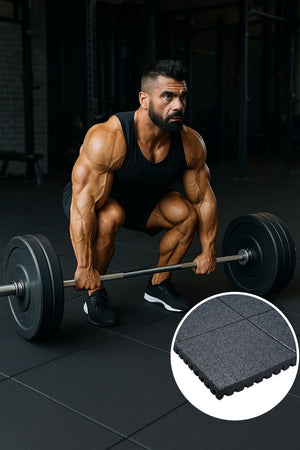 SALE
SALE30mm Rubber Gym Tiles | Olympic Lifting & CrossFit |...
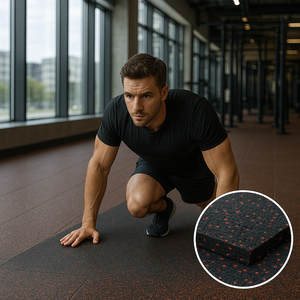 SALE
SALEHeavy-Duty Rubber Gym Flooring Rolls UK | Commercial...
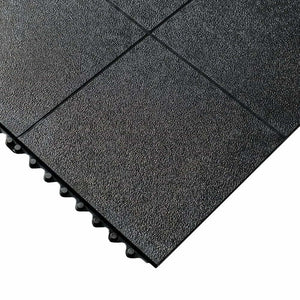 SALE
SALE17mm Interlocking Rubber Gym Mats | 80kg Drop Rated ...
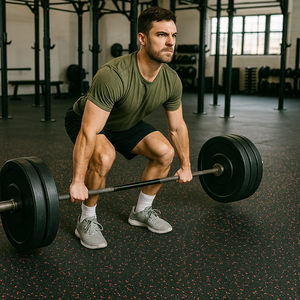 SALE
SALEHeavy-Duty Rubber Gym Flooring Rolls UK | Ultimate F...
Specify Your Gym Flooring With Confidence
Experience the Quality
Before You Commit
We send you a complimentary material sample so you can assess thickness, texture, and grip in your own space. No obligation. No cost.