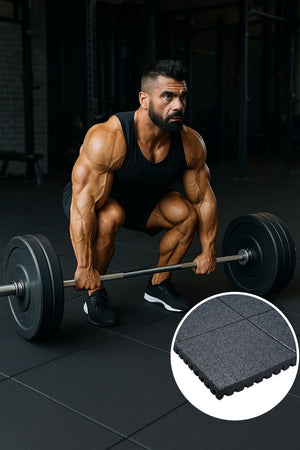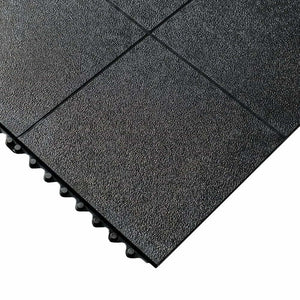

Interlocking black rubber gym floor tiles with a textured surface
16mm Rubber Gym Tiles UK close-up texture detail
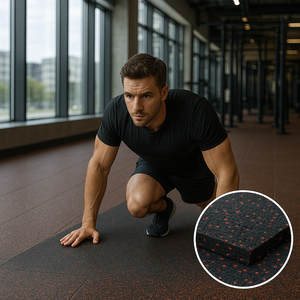
16mm Rubber Gym Tiles UK installed in a gym setting
16mm Rubber Gym Tiles UK thickness and edge profile
16mm Rubber Gym Tiles UK surface texture
16mm Rubber Gym Tiles UK colour and finish options
16mm Rubber Gym Tiles UK being installed on gym floor
16mm Rubber Gym Tiles UK in a commercial gym environment
16mm Rubber Gym Tiles UK size comparison and dimensions
16mm Rubber Gym Tiles UK used in a home gym setup
Thickness Guide

Which thickness do I need?

4–6mm — Cardio, treadmills, yoga. Light floor protection.

10–12mm — Home gyms, dumbbells up to 30kg. Great all-rounder. Most Popular

16–17mm — Commercial gyms, heavy free weights, CrossFit.

20–30mm — Olympic lifting, deadlift platforms. Maximum protection.

Not sure? Ask our experts

🎉 25% OFF Automatically Applied at Checkout

16mm Interlocking Rubber Gym Tiles | 500mm × 500mm | EN 13893 Certified | Commercial Grade

Select Size
Price
Regular price £19.99 (Inc. VAT)
Regular price £25.69 (Inc. VAT) Sale price £19.99 (Inc. VAT)
Save £5.70 (Inc. VAT)
/

In stock, Free Shipping

SSL Secure
Free UK Delivery
30-Day Returns

COMMERCIAL GRADE | ★★★★★ 4.9/5

16mm Interlocking Rubber Gym Tiles — 500mm × 500mm | Commercial Grade | Free UK Delivery

UK's go-to commercial-grade interlocking rubber gym tile — 16mm thick, 500mm × 500mm puzzle-edge format, 900 kg/m³ dense SBR rubber with 70% impact absorption and 65% noise reduction. EN 13893 slip-resistant, REACH & CE certified, 12–15 year commercial lifespan. Matching safety ramps available. Free UK delivery on all orders.

🏋️ 70% Impact Absorption 65% Noise Reduction EN 13893 Slip-Resistant 900 kg/m³ Density 500mm × 500mm Tiles 12–15 Year Lifespan ✓ CE & REACH Certified ✓ Free UK Delivery ✓ UK Stock — Fast Dispatch Recycled SBR Rubber Puzzle Interlocking Edge No Adhesive Required Ramps Available

Full Technical Specifications

Thickness16mm (±1mm)
Tile Size500mm × 500mm
Weight per Tile7.5 kg
Coverage per Tile0.25 m² (4 tiles = 1 m²)
MaterialRecycled SBR Rubber
Density900 kg/m³
Impact Absorption70% force reduction
Noise Reduction65% sound dampening
Slip ResistanceEN 13893 certified
Edge ProfilePuzzle interlocking (all 4 sides)
CertificationsCE, REACH
Expected Lifespan12–15 years (commercial)
ColourBlack
InstallationNo adhesive — tool-free
DeliveryFree UK — all orders
StockUK — fast dispatch

Important: These Are 500mm × 500mm Tiles — 4 Tiles Per m²

⚠️ Tile Size vs Coverage — What to Know Before You Buy

These tiles are 500mm × 500mm — half the size of 1m × 1m format tiles. You need 4 tiles to cover 1 m². The smaller format has advantages: easier to handle solo (7.5kg per tile vs 14–18kg for 1m tiles), more precise cuts around obstacles, and better flexibility around columns, pipes, and door frames. For large open-plan areas, the 1m × 1m format is often faster to lay.

✅ When 500mm Tiles Are Better

Awkward room shapes with lots of cuts. Working alone (lighter to move). Rooms with pillars, columns, or multiple doorways. Smaller areas where a 1m tile would waste large cut pieces.

✅ When 1m × 1m Tiles Are Better

Large, open rectangular areas (faster to lay, fewer joins). Heavier loads where tile mass adds stability. Commercial gym refit projects with a team installing.

Why 16mm? The Commercial Sweet Spot Explained

16mm is the most requested commercial gym tile thickness in the UK. It's thick enough for real weight training — dumbbells, kettlebells, cable machines, functional training — yet light enough to handle solo and cost-effective for covering large areas. At 900 kg/m³ density and 70% impact absorption, 16mm SBR rubber delivers the protection commercial facilities need without the premium cost of 20mm or 30mm specialist tiles.

Thickness Best For Weight / Load Key Consideration
10–12mm Light cardio, yoga, stretching, pilates studios Bodyweight, light machines (<50kg) Cheapest option — minimal impact absorption for weights
16mm ★ THIS PRODUCT Functional training, group fitness, light-commercial weight areas, home gyms Dumbbells to 40kg, barbells (controlled), squat racks, all cardio machines Commercial-grade density (900 kg/m³) — ideal balance of protection, cost, and handleability
20mm Heavy free-weight zones, CrossFit boxes, PT studios Barbells, heavy dumbbells, moderate drops Better drop protection — step up if regular barbell work involves drops >80kg
30mm+ Olympic lifting platforms, powerlifting, dedicated drop zones Barbell drops, 200kg+ loads Maximum protection — required for serious Olympic lifting and weight drops

What Makes 900 kg/m³ SBR Rubber Different From Cheaper Alternatives

Not all black rubber gym tiles are equal. The density and composition of the rubber determines how long the tile lasts, how well it absorbs impact, and whether it holds up under heavy equipment long-term.

🔬 High Density (900 kg/m³)

At 900 kg/m³ density, these tiles resist compression under static equipment loads. Low-density foam or cheap rubber tiles "flatten" under rack feet over time, leaving permanent indents. At 900 kg/m³, these tiles recover their original profile.

♻️ Recycled SBR Composition

SBR (Styrene-Butadiene Rubber) from recycled sources — typically truck and car tyres — provides the optimal combination of elasticity, toughness, and impact absorption for gym flooring. It's the material used in commercial gym installations worldwide.

🔇 65% Noise Reduction

The 16mm depth of dense rubber absorbs and dissipates vibration from treadmills, rowing machines, and footfall. Critical for upper-floor installations, above-ground commercial spaces, and multi-tenant buildings where training noise is a concern.

💧 70% Impact Absorption

70% of impact force from dropped dumbbells, jumping, and footfall is absorbed by the rubber rather than transmitted to the subfloor. Protects concrete floors from damage, reduces fatigue on joints during cardio and HIIT work.

📜 EN 13893 Slip-Resistant + CE & REACH

EN 13893 certification verifies safe slip resistance for sports and gym flooring applications. REACH certification confirms no harmful chemicals in the rubber compound. CE marked to European safety standards. Essential for commercial premises compliance.

📅 12–15 Year Lifespan

Commercial-grade SBR rubber at 900 kg/m³ doesn't degrade like foam or lower-density rubber alternatives. In commercial facilities with daily use, these tiles maintain their profile and performance for 12–15 years. Far better ROI than replacing cheap tiles every 3–5 years.

What Equipment Can Be Used on 16mm Rubber Tiles?

✅ All Cardio Machines

Treadmills, rowing machines, exercise bikes, cross-trainers, air bikes, ski ergs, assault bikes. 16mm provides effective vibration absorption and thermal insulation for all cardio equipment, including commercial-grade machines.

✅ Functional Training Zones

Battle ropes, sled push areas, box jump platforms, HIIT circuits, CrossFit warm-up areas, plyometric work, agility ladders, resistance bands. The EN 13893 non-slip surface gives secure footing for dynamic lateral movements.

✅ Dumbbells & Kettlebells

Controlled use of dumbbells up to 40kg and kettlebells on this surface is well within the tile's specification. For frequent drops of heavy dumbbells (30kg+), a rubber landing mat in the drop zone is recommended.

✅ Squat Racks & Cable Machines

Freestanding squat racks, power cages, cable crossovers, lat pulldown stations. The 900 kg/m³ density resists permanent compression under rack feet — no "dents" from static equipment over time.

✅ Group Fitness & Studio Classes

Yoga, Pilates, body pump, spin classes, aerobics. The slightly textured surface gives grip for bare feet and training shoes. 65% noise reduction makes this suitable for multi-floor commercial facilities.

⚠️ Heavy Barbell Drops

16mm provides good general protection but is not designed for repeated heavy barbell drops from height (Olympic lifting, failed deadlifts above 80kg). For dedicated Olympic lifting platforms, upgrade to 30mm tiles or add a rubber deadlift mat on top of the 16mm floor.

Where These Tiles Are Installed

🏋️
Commercial Gyms
🏠
Home Gyms
🚗
Garage Gyms
🤸
PT Studios
CrossFit Zones
🏫
School Sports
🏨
Hotel Gyms
🏥
Rehab & Physio
🏢
Corporate Wellness
🎯
Leisure Centres
🏗️
Basement Gyms
🥊
Boxing & MMA

The Interlocking Puzzle Edge System

🧩

4-Sided Puzzle Edge — No Tools, No Adhesive, No Contractors

All four edges of each tile feature matching male/female puzzle profiles that connect securely without any adhesive, screws, or specialist equipment. The interlocking system, combined with the tile weight (7.5kg per tile), creates a stable floor that holds its position during training without movement or gaps opening between tiles.

  • Tool-free installation: Tiles press together by hand — no adhesive, no mechanical fixings, no specialist installer needed. A typical home gym takes one person 1–2 hours.
  • Modular and reconfigurable: The floor can be lifted, reconfigured, or extended at any time. Ideal for rented spaces or gym setups that may change.
  • Expandable: Order additional tiles to extend your floor at any time — the puzzle edge profile is consistent across all batches.
  • Individual tile replacement: If one tile is damaged, replace just that tile without disturbing the rest of the floor. No relaying, no downtime.
  • No subfloor damage: No adhesive means no residue, no damage to concrete or timber subfloors. Suitable for rental properties and temporary gym setups.
  • Fast commercial refits: A team can floor a 100m² gym zone in a single working day. Interlocking puzzle tiles are the fastest commercial gym flooring format available.

Step-by-Step Installation Guide — 16mm Interlocking Tiles

A 20m² floor takes one person 2–3 hours. A team of two can floor the same area in under an hour. No tools are required beyond a sharp utility knife or jigsaw for perimeter cuts.

1
Acclimatise for 24 Hours (Important for Cold Garages) Stand tiles on end or lay flat in the room for at least 24 hours before installation, at 15°C+. Rubber contracts in cold temperatures — tiles installed cold in a garage may develop small gaps as they expand to room temperature. Acclimatising prevents this.
2
Prepare the Subfloor The subfloor must be clean, dry, and level. Sweep and vacuum thoroughly — grit and debris beneath tiles will abrade the tile underside and cause wear. For concrete with surface irregularities over 3mm, use a self-levelling compound before tiling. These tiles work on concrete, screed, timber, and existing hard flooring. Do not install on carpet.
3
Plan the Layout Before Starting At 500mm × 500mm, you have more flexibility than 1m tiles. For rectangular rooms, start from the centre and work outward to ensure equal-width cuts at both perimeter walls. For garage gyms, starting from the rear wall gives a clean finish at the garage door opening where ramps will terminate. Sketch the layout first to minimise wasted cuts.
4
Connect Tiles Row by Row Engage the puzzle edges by pressing tiles firmly together at a slight angle, then pressing flat. Work in rows across the room. The interlocking connection should feel positive and snug — if tiles resist, check the orientation and try again. Do not force misaligned tiles; they always connect easily at the correct angle.
5
Cut Perimeter and Obstacle Tiles Mark cut lines with chalk or felt-tip marker. Score firmly with a sharp utility knife and metal straight edge — 3–4 passes at 16mm thickness is sufficient to snap clean. For curved cuts around pillars, pipes, or irregular obstacles, use a jigsaw with a medium-coarse blade. Always cut on a sacrificial board. Use fresh blades — a blunt knife causes ragged edges.
6
Fit Safety Ramps at All Exposed Edges Ramped safety edges are the finishing touch that takes the installation from functional to professional. Fit ramps at all exposed perimeter tile edges. For permanent commercial installations, a small bead of contact adhesive along the ramp base prevents ramps kicking up under foot traffic. For home gyms, the weight of tiles adjacent to ramps is usually sufficient to keep them in place.

How Many Tiles Do You Need? — Quick Reference

Each tile covers 0.25 m² (500mm × 500mm). You need 4 tiles per m². Measure your space in metres, multiply length × width for total m², multiply by 4 for tile count, then add 10% for cuts and waste. Round up to nearest whole tile.

Common Gym and Studio Sizes

Small home gym (2.5m × 2.5m) 6.25 m² 28 tiles (with 10% waste)
Garage gym — half (3m × 3m) 9 m² 40 tiles
Garage gym (4m × 5m) 20 m² 88 tiles
Large garage (5m × 6m) 30 m² 132 tiles
PT studio (6m × 6m) 36 m² 160 tiles
Commercial gym zone (8m × 10m) 80 m² 352 tiles

💡 Tip: Always add at least 10% to your tile count for cuts, waste, and future single-tile replacements. It's far more cost-effective to order slightly more now than to source a few additional tiles months later. Ordering extras also ensures your tiles come from the same production batch for consistent colour matching.

Safety Ramps — Why They're Essential, Not Optional

⚠️

A 16mm vertical edge is a real trip hazard

Any exposed tile edge creates a 16mm step that is easy to catch with a training shoe during a lateral movement or while carrying equipment. In commercial facilities, exposed floor edges without ramped transitions contravene the Workplace (Health, Safety and Welfare) Regulations 1992. In home gyms, they're just a practical hazard. Safety ramps eliminate the trip risk and give the floor a professional, finished appearance.

  • Ramped Safety Edge (500mm): Fits along the straight perimeter edges of your tiled area. Provides a smooth 16mm-to-floor transition on the straight run. Order one per 500mm of exposed perimeter edge.
  • Ramped Edge With Corner (580mm): Fits at corners where two perimeter edges meet. The corner piece covers a straight run plus the corner turn in one piece. Order one per external corner of your tiled area.
  • How many ramps: Calculate the perimeter of your tiled area in mm. Divide by 500 for the number of straight ramps. Count external corners for corner ramps. For a 4m × 5m room: perimeter = 18,000mm ÷ 500 = 36 ramp pieces + 4 corner pieces.
  • Colour tip: For commercial premises, consider a high-visibility yellow edge strip to clearly mark the boundary of the gym area. For home gym aesthetics, black ramps create a seamless, monolithic look.

How We Compare — UK Gym Tile Market

Feature Our 16mm Tile Budget Foam Tiles Low-Density Rubber Tiles Premium 20mm SBR
Material SBR Rubber EVA Foam Low-grade rubber SBR Rubber
Density 900 kg/m³ 150–250 kg/m³ 500–700 kg/m³ 950–1,000 kg/m³
Impact Absorption 70% High but spongy — compresses permanently 30–50% 80%+
Commercial Lifespan 12–15 years 1–3 years (heavy use) 3–6 years 15–20 years
CE & REACH Certified ✓ Yes ✗ Often not ~ Sometimes ✓ Yes
Slip Resistance (EN 13893) ✓ Certified ~ Untested ~ Untested ✓ Certified
Noise Reduction 65% Low 30–40% 70%+
Free UK Delivery ✓ All Orders ~ Often min spend ~ Often min spend ~ Often min spend

Maintenance — Rubber Gym Tiles Are the Easiest Gym Floor to Keep Clean

The non-porous, closed-cell rubber surface resists liquid absorption — sweat, spilled drinks, and cleaning products don't penetrate the tile. This makes rubber gym tiles significantly more hygienic and easier to maintain than carpet, foam, or porous surface alternatives.

  • Daily: Sweep or vacuum to remove chalk dust, grit, and sand. These act as abrasives underfoot and cause accelerated surface wear over time. A 5-minute sweep after every session extends tile life significantly.
  • Weekly: Mop with warm water and a pH-neutral gym floor cleaner or mild disinfectant. The rubber surface cleans in one pass — no scrubbing required. Allow to air-dry before use.
  • Deep clean: Periodically lift individual tiles (the puzzle edge releases with an upward pull) and clean both the tile underside and the subfloor beneath — sweat and moisture can accumulate over time in the gaps.
  • Odour (new tiles): Fresh SBR rubber has a characteristic smell that's completely normal and harmless. In a ventilated space, the odour fades within 3–7 days. Washing new tiles with mild soapy water before installation accelerates this.
  • Do not use: Bleach, solvent-based cleaners (acetone, white spirit), steam mops, or abrasive pads. These degrade the rubber compound, cause surface hardening, and void certification. Stick to pH-neutral gym cleaners.
  • Equipment feet: Over years of use, heavy equipment feet (squat rack, cable machine) may leave slight impressions. These are cosmetic only and don't affect tile performance. Rotating equipment positions periodically distributes wear evenly.

Frequently Asked Questions — 16mm Rubber Gym Tiles

How many 500mm tiles do I need per m²?

You need 4 tiles to cover 1 m² (500mm × 500mm = 0.25m² per tile). Measure your room in metres, multiply length × width for total m², then multiply by 4 to get your tile count. Add 10% for cuts and waste. Round up to the nearest whole tile. For example: a 4m × 5m garage gym = 20m² × 4 = 80 tiles + 10% = 88 tiles.

Are these tiles good enough for a home gym with a squat rack?

Yes. 16mm at 900 kg/m³ density provides excellent protection for home gym squat rack installations. The tiles resist permanent compression under rack feet. For the lifting area directly under the bar, where you might occasionally drop a loaded bar, we recommend placing a rubber deadlift mat on top of the 16mm tiles for additional drop protection. For regular Olympic lifting or frequent barbell drops above 80kg, upgrade to 20mm or 30mm tiles throughout.

Will these tiles slide or shift during training?

No. The combination of 7.5kg per tile, the puzzle interlocking system, and the rubber-on-subfloor friction creates a stable floor that doesn't shift during training, including dynamic lateral movements, sled pushes, and HIIT circuits. For very smooth polished concrete or resin subfloors, placing a thin non-slip mat at the perimeter adds extra security before equipment is positioned.

Can I install these on carpet?

Not recommended. Carpet is a compressible surface — as equipment is placed on the tiles, the carpet compresses unevenly beneath them, causing the tile surface to become uneven and joins to open up. For best results, always lift carpet and install directly on the concrete or screed subfloor. If removing the carpet is not possible, a rigid board layer (hardboard or plywood) between carpet and tiles provides a stable, level base.

How do I cut these tiles for unusual room shapes?

500mm tiles are significantly easier to cut accurately than 1m tiles — particularly for curves and complex cuts. For straight cuts: score firmly with a sharp utility knife and metal straight edge (3–4 passes at 16mm) and snap clean. For curved cuts around pipes, pillars, or irregular shapes: use a jigsaw with a medium-coarse blade (6-8 TPI). Mark complex shapes by placing the tile and tracing around the obstacle directly. Always cut on a sacrificial board to protect your subfloor and blade.

Are these tiles suitable for upper-floor or above-ground installations?

Yes — 16mm dense rubber tiles are an excellent choice for upstairs home gyms and above-ground commercial spaces. The 65% noise reduction significantly dampens the sound of footfall, equipment vibration, and dropped items transmitted to rooms below. For upper-floor installations, we also recommend anti-vibration feet under treadmills and heavy machines to further reduce transmitted noise.

Can I use these tiles outdoors?

These tiles are designed primarily for indoor use. While SBR rubber itself is weather-resistant, the puzzle interlocking edge is not rated for permanent outdoor installation — UV exposure, freeze-thaw cycles, and water pooling between joins can cause the tiles to separate and warp over time. For outdoor gym areas, patios, and garden gyms, look at our outdoor rubber tile range which is UV-stabilised and designed for external use.

How long does installation take?

A 20m² area (80 tiles) takes one person approximately 2–3 hours including layout planning and perimeter cuts. A team of two can complete the same area in 60–90 minutes. The 500mm format is particularly fast for areas with lots of obstacles — each individual cut is smaller and quicker than with 1m tiles. Commercial gym zone refits with a crew of 3–4 people can floor 200m²+ in a single working day.

Do you offer trade pricing for larger commercial orders?

Yes. We regularly supply PT studios, CrossFit boxes, hotel gyms, leisure centres, NHS facilities, schools, and commercial gym operators at trade pricing. Contact us with your floor area dimensions and we'll return a quote — typically within 24 hours. Bulk orders also qualify for priority palletised delivery with tailored lead times to fit your facility refit schedule.

What's the difference between the tile, safety edge, and corner ramp variants?

The Rubber Gym Tile (500mm × 500mm × 16mm) is the main floor tile that makes up your gym floor area. The Ramped Safety Edge (500mm length) fits along the straight perimeter edges of your tiled area, creating a bevelled 16mm-to-floor transition that eliminates the trip hazard. The Ramped Edge With Corner (580mm) is designed for external corners where two straight edges meet — it provides the ramp plus the corner turn in one piece. Order tiles for the floor area, safety edges for straight perimeter runs, and corner pieces for each external corner.

⭐ Trusted by 500+ Commercial Facilities 📜 CE & REACH Certified 🏅 EN 13893 Slip-Resistant 🇬🇧 UK Stock — Fast Dispatch 🚚 Free UK Delivery — All Orders 📞 Expert Advice Available ♻️ 100% Recycled SBR Rubber 📅 12–15 Year Commercial Lifespan

Not Sure How Many Tiles You Need? We'll Calculate It Free.

Tell us your room dimensions and we'll give you an exact tile, ramp, and corner piece count — no obligation, no hard sell.

Need Advice? Speak to a Flooring Specialist

Not sure which thickness, format or quantity is right for your project? Our flooring specialists are here to help — commercial quotes, sample requests and installation advice all available.

Secure Checkout— SSL Encrypted & Safe Payment
VISAPayPalAMERICANEXPRESS Pay
Commercial
Commercial gyms & PT studios
16 mm
EN 13893 Certified DS-rated slip resistance
SBR Rubber Recycled commercial-grade
Interlock Click together, no adhesive
70% Noise Cut Sound & vibration dampening
REACH + CE European compliance certified
Free UK Delivery Dispatched within 2-5 days
Impact Protection
Noise Reduction
Durability
-537+ SOLD THIS MONTH
SAME DAY DISPATCH BEFORE 2PM
FREE UK DELIVERY
SPEAK TO A FLOORING SPECIALIST Free advice on product selection, sizing & installation
Coverage 0.25m² per tile — 24 tiles for a standard 2.4m × 2.4m platform
Weight 4.5kg per unit
Returns 14-day returns on unused product. Full policy

Trusted By Leading Organisations

🧮 Flooring Calculator

Enter your room size and pick a product to see exactly what you need.

You may also like
ORDER WITH CONFIDENCE

Specify Your Gym Flooring With Confidence

Trade Pricing Available
Bulk Quotes in 24 Hours
UK-Based Support Team
WHATSAPP US    📞 01282 277 710  |  ✉️ sales@gymflooringuk.uk
FREE SAMPLE SERVICE

Experience the Quality
Before You Commit

We send you a complimentary material sample so you can assess thickness, texture, and grip in your own space. No obligation. No cost.

✓ Free UK Delivery ✓ No Obligation ✓ Dispatched Next Day

Your details are used solely to fulfil your sample request.