





How to Build a Deadlift Platform with Rubber Tiles
How to Build a Deadlift Platform with Rubber Tiles
A dedicated deadlift platform is one of the best investments you can make for any serious lifting space.
Whether you're fitting out a garage gym, a PT studio, or a commercial strength facility, a properly built platform protects your subfloor, reduces noise, provides a stable lifting surface and looks incredibly professional.
The best part? You can build one yourself in a few hours using plywood and rubber gym tiles.
Why Build a Deadlift Platform?
Dropping a loaded barbell — even from hip height — generates enormous force. On bare concrete, that force cracks the slab.
On standard gym flooring, it can compress tiles beyond their limit over time. A deadlift platform distributes that impact across a larger area and absorbs it through multiple layers of material.
Key benefits include:
- Subfloor protection — prevents cracks in concrete and damage to wooden floors
- Noise reduction — rubber absorbs impact sound, crucial for home gyms and shared buildings
- Stable footing — a flat, level surface that won't shift during heavy pulls
- Equipment protection — less bounce means less stress on your barbell and plates
- Visual impact — a platform defines your lifting zone and looks professional
Materials You'll Need
For a standard 8ft × 4ft (2.4m × 1.2m) platform:
- 2 × sheets of 18mm plywood (2440 × 1220mm) — structural base
- 1 × sheet of 18mm plywood (cut to centre strip) — top lifting surface
- 4–6 × rubber gym tiles (20mm–30mm thick) — impact zones
- Wood screws (50mm countersunk)
- Wood glue (PVA or construction adhesive)
- Optional: wood stain or varnish for the centre strip
Platform Design: The Classic 3-Layer Build
The most popular and proven design uses three layers:
Layer 1: Plywood Base
Two full sheets of 18mm plywood stacked and screwed together. This creates a rigid 36mm base that spreads impact force across the entire platform footprint. Glue between the layers and screw every 200mm for a solid bond.
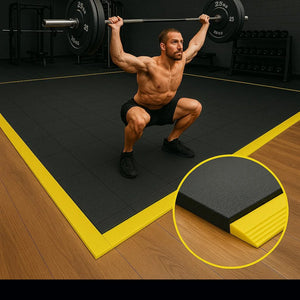
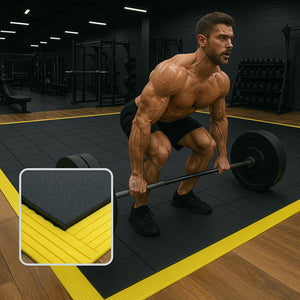
Layer 2 (Sides): Rubber Tiles
On each side of the platform — where the weight plates land — you lay rubber gym tiles directly onto the plywood base.
These are the impact absorption zones. Use 20mm tiles minimum; 30mm is better for Olympic lifts and heavy deadlifts over 200kg.
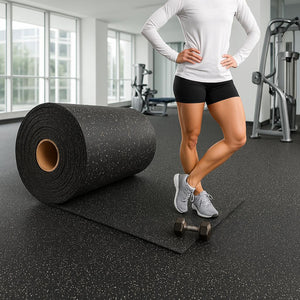
Our interlocking rubber tiles are perfect for this — they fit tightly together and can be trimmed to size with a utility knife.
Layer 2 (Centre): Plywood Lifting Strip
The centre strip — where you stand — is a third piece of 18mm plywood cut to approximately 1220mm × 600mm (or wider if you prefer).
This gives you a hard, flat surface for your feet with zero compression, ensuring maximum stability during heavy pulls. Sand it smooth and apply a coat of wood stain for a professional finish.
Step-by-Step Build Instructions
Step 1: Cut Your Plywood
If you don't have a table saw, most timber merchants will cut sheets to size for a small fee. You need:
- 2 × full sheets (2440 × 1220mm) for the base
- 1 × centre strip (1220 × 600mm) for the top
Step 2: Glue and Screw the Base
Apply wood glue across the entire surface of the first sheet. Lay the second sheet on top, align the edges, and drive countersunk screws every 200mm in a grid pattern. Wipe away any glue squeeze-out. Allow 2–4 hours to set.
Step 3: Position the Centre Strip
Find the centre of the platform and glue/screw the lifting strip in place. Leave equal space on each side for your rubber tiles.
For a 1220mm-wide platform with a 600mm centre strip, you'll have approximately 310mm of rubber on each side.
Step 4: Cut and Fit Rubber Tiles
Measure the remaining space on each side of the centre strip. Cut your rubber tiles to fit snugly.
If using interlocking tiles, trim off the interlocking edges on the sides that meet the plywood strip and the platform edge. Use a sharp Stanley knife with a metal straight edge — fresh blades make cleaner cuts.
You can glue the rubber to the plywood with contact adhesive, or simply friction-fit them. On a well-built platform, the tight fit is usually enough to prevent movement.
Step 5: Finish the Centre Strip
Sand the plywood smooth (120-grit then 240-grit). Apply 2–3 coats of polyurethane varnish or a wood stain of your choice. Some lifters prefer a raw wood surface for maximum grip — it's personal preference.
Step 6: Position and Level
Place the finished platform on your gym floor. If the underlying floor isn't perfectly level, use thin rubber shims underneath to eliminate any rocking. The platform should feel completely solid when you stand on it.
Choosing the Right Rubber Tile Thickness
15mm rubber: Suitable for deadlifts up to ~120kg with controlled lowering (no dropping)
20mm rubber: Good for deadlifts up to ~180kg with moderate drops
30mm rubber: Recommended for heavy deadlifts (200kg+) and Olympic lifts with full drops from overhead
43mm rubber: Maximum protection — ideal for commercial platforms handling multiple daily users
Platform Size Options
The standard 8×4ft platform works for most situations, but you can adapt the dimensions:
- 8×4ft (2.4m × 1.2m): Standard — fits most garage gyms and squat rack setups
- 8×6ft (2.4m × 1.8m): Wider — better for Olympic lifting where you need more lateral space
- 8×8ft (2.4m × 2.4m): Full competition size — ideal for commercial gyms and weightlifting clubs
Can You Build a Platform on Top of Existing Gym Flooring?
Yes — and in many cases this is the best approach. If you already have rubber gym flooring covering your gym, building a platform on top adds an extra layer of protection in your heaviest lifting zone. The
existing floor acts as an additional shock absorption layer beneath the plywood base.
This is especially useful in rented spaces where you need maximum floor protection without permanent modifications.
Cost Breakdown
- 3 × plywood sheets (18mm): £30–£60
- Rubber tiles (20mm, ~0.5m²): £30–£60
- Screws, glue, varnish: £10–£20
- Total: £70–£140
Compare that to a pre-built commercial platform at £300–£600+, and the DIY route is clearly excellent value.
Maintenance Tips
- Wipe down the rubber sections weekly with a damp cloth and mild cleaner
- Re-varnish the centre strip annually if it starts to show wear
- Check screws every few months — tighten any that have loosened from vibration
- Replace rubber tiles if they develop deep gouges or permanent compression (usually after 3–5 years of heavy use)
Common Mistakes to Avoid
- Using OSB instead of plywood: OSB is weaker and delaminates with moisture. Always use proper plywood.
- Skipping the glue: Screws alone allow layers to shift. Glue creates a monolithic base.
- Rubber too thin: 10mm rubber won't handle heavy drops. 20mm minimum, 30mm recommended.
- Not levelling the platform: A wobbly platform is dangerous. Check with a spirit level and shim if needed.
- Making it too small: Your plates need room to land. Ensure at least 250mm of rubber on each side of the centre strip.
Final Thoughts
Building a deadlift platform is a straightforward weekend project that dramatically improves your lifting setup.
With quality rubber tiles from Gym Flooring UK, some plywood and basic tools, you can create a platform that rivals commercial options at a fraction of the cost.
Need rubber tiles for your platform build? Shop our range or contact us for thickness recommendations based on your lifting style.
Frequently Asked Questions
What size should a deadlift platform be?
A standard deadlift platform is 8ft x 4ft (244cm x 122cm). This gives enough space for the barbell, plates, and safe footing on both sides. Compact home versions can be 6ft x 4ft.
What rubber thickness do I need for a deadlift platform?
Use 20mm rubber tiles or mat on the outer wings where the plates land. The centre strip (under your feet) is typically wood (plywood) for stability. Heavier lifters should consider 30mm rubber for better impact absorption.
Can I drop weights on rubber gym tiles without a platform?
For moderate weights (under 100kg), thick rubber tiles (15–20mm) can absorb barbell drops reasonably well. For serious Olympic lifting or deadlifts above 150kg, a proper platform is strongly recommended to protect both the floor and the barbell.
How much does it cost to build a deadlift platform in the UK?
A DIY deadlift platform typically costs £80–£200 in materials: two sheets of 18mm plywood (£40–£80) plus rubber tiles or mat for the wings (£40–£120 depending on thickness and size).
What wood should I use for a deadlift platform?
18mm or 22mm structural plywood (OSB3 or C&DN grade) works well. Use two layers for rigidity. Hardwood ply or birch ply gives the best finish for the centre strip where you stand.
