





Hotel and Corporate Gym Flooring: Specification Guide
Hotel and Corporate Gym Flooring: Specification Guide
Hotel fitness centres and corporate office gyms have unique flooring requirements that differ significantly from traditional commercial gyms.
The flooring must look premium, perform under moderate use, minimise noise transmission to adjacent rooms, and meet building regulations — all while being easy to maintain.
This specification guide covers everything architects, facilities managers and gym designers need to know when specifying flooring for hospitality and corporate fitness environments.
How Hotel and Corporate Gyms Differ from Commercial Gyms
Understanding these differences is critical to getting the flooring specification right:
- Usage intensity: Moderate — typically 20-50 users per day vs 200+ in a commercial gym
- Equipment profile: Cardio-heavy (treadmills, bikes, cross-trainers) with a small free weights section
- Noise sensitivity: Extremely high — hotel gyms are often above or below guest rooms; corporate gyms adjoin offices
- Aesthetic standard: Premium — must match the brand identity of a 4/5-star hotel or modern office
- Maintenance: Handled by general housekeeping, not specialist gym staff
- Compliance: Must meet building regs for fire, slip resistance and accessibility
Flooring Material Options
1. Rubber Roll Flooring (Most Specified)
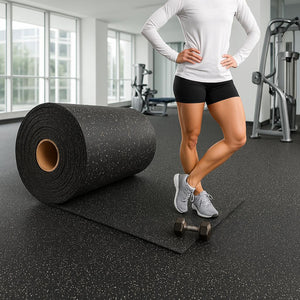
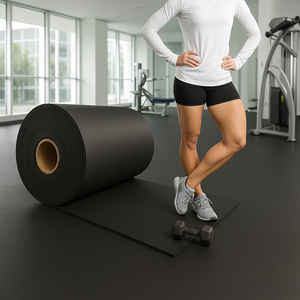
Rubber rolls are the most commonly specified flooring for hotel and corporate gyms. They provide a seamless, clean appearance with excellent performance characteristics.
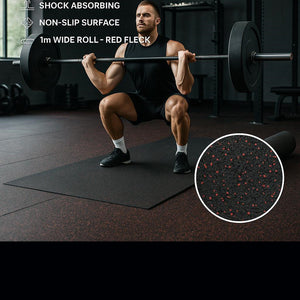
Available in various colours and finishes — including speckled designs that hide wear — rubber rolls are the industry standard for good reason.
Typical specification: 6mm–10mm for cardio zones; 15mm–20mm for free weights areas
Key benefit: Seamless appearance with no visible joints — essential for premium environments.
2. Rubber Tiles
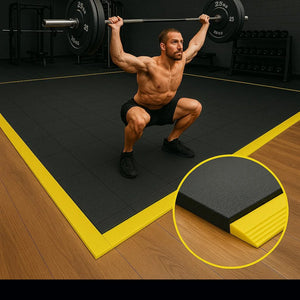
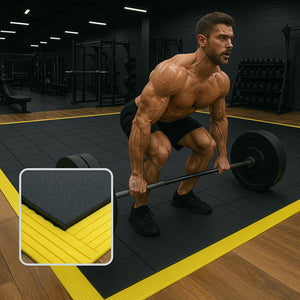
Rubber tiles are an excellent alternative, particularly for spaces where future access to underfloor services is needed. Tiles can be lifted and replaced individually, making maintenance straightforward. Interlocking tiles eliminate the need for adhesive in many installations.
Typical specification: 15mm–20mm interlocking tiles for general gym areas; 30mm+ for dedicated weight zones
3. Vinyl with Acoustic Backing
Some hotel designers specify vinyl flooring with acoustic backing for a more 'residential' look. While vinyl offers excellent design flexibility (wood-effect, stone-effect, custom patterns), it's less suitable for areas with free weights due to lower impact resistance.
Best for: Yoga studios, stretching areas and cardio-only zones within the gym.
4. Hybrid Systems
Many hotel and corporate gyms use a combination of materials: rubber in the weights and functional area, vinyl or carpet tiles in the stretching zone, and a premium entrance mat in the doorway.
This zoned approach optimises performance and aesthetics for each area.
Noise and Vibration Control
This is often the single most important factor in hotel and corporate gym flooring specification. Impact noise from dropped weights, running on treadmills and jumping travels through the building structure and into adjacent spaces.
Impact Sound Insulation (ΔLw)
Rubber flooring significantly reduces impact sound transmission. Key considerations:
- 6mm rubber: Provides approximately 15-18dB impact sound reduction
- 10mm rubber: Approximately 20-22dB reduction
- 20mm rubber: Approximately 25-28dB reduction
- 30mm+ rubber: 30dB+ reduction — recommended where gym is directly above guest rooms
For the best results, combine thick rubber flooring with a floating floor system. This isolates the gym floor from the building structure, preventing vibration transfer.
Vibration from Cardio Equipment
Treadmills and cross-trainers generate continuous low-frequency vibration. In addition to floor-wide rubber, consider placing individual rubber isolation pads under each piece of cardio equipment. This dual-layer approach catches vibration at the source.
Aesthetic Considerations
In hotel and corporate environments, the gym is an extension of the brand. Flooring must look as good as it performs.
- Colour: Black and dark grey are standard. Speckled finishes (black with grey, blue or red flecks) add visual interest while hiding dirt and scuff marks.
- Finish: Smooth finishes look premium but show marks more easily. A lightly textured surface is the best compromise between aesthetics and practicality.
- Borders and details: Use a contrasting colour border or inlaid logo to reinforce brand identity.
- Transitions: Where gym flooring meets corridor carpet or tile, use proper transition strips for a clean, professional edge.
Fire Rating and Building Regulations
Gym flooring in commercial buildings must comply with fire safety regulations:
- Cfl-s1 or Bfl-s1: Required fire classification for flooring in commercial buildings under EN 13501-1
- Slip resistance: Must achieve R10 or R11 rating for wet-use areas (minimum R9 for dry areas)
- Accessibility: Flooring must not impede wheelchair access — no trip hazards at transitions, firm surface for wheelchair movement
- VOC emissions: Low-VOC products preferred, particularly in corporate environments with BREEAM or WELL building certification targets
Zone-by-Zone Specification
Cardio Zone
Rubber rolls at 8-10mm thickness. Focus on vibration damping and a smooth aesthetic. Add isolation pads under each machine. Consider a slightly different colour or speckle pattern to visually define this zone.
Free Weights Zone
Rubber tiles at 20mm minimum — 30mm tiles if the weight zone includes dumbbells over 30kg. This area takes the most punishment. Choose a durable, easily replaceable tile format.
Functional / Stretching Zone
15mm rubber tiles or a premium vinyl with acoustic backing. Some hotels use a turf strip for functional training — this adds visual interest and a point of difference.
Entrance / Transition
Heavy-duty entrance matting to catch dirt and moisture from shoes. Recessed mat wells look the most professional. Transition strips between the gym and corridor flooring must be flush and accessible.
Installation Considerations
- Subfloor preparation: Concrete must be dry (moisture content below 75% RH), level (within 3mm over 2m) and clean. Self-levelling compound may be needed.
- Adhesive: Use manufacturer-specified adhesive for rubber rolls. Interlocking tiles can often be dry-laid.
- Acclimatisation: Allow rubber to acclimatise to room temperature for 24-48 hours before installation.
- Seaming: For rubber rolls, seams should be heat-welded or sealed for a waterproof finish — important for hygiene and cleaning.
Maintenance Requirements
Hotel and corporate gyms are typically cleaned by general housekeeping staff, so the flooring must be easy to maintain:
- Daily: Vacuum or dust mop to remove grit. Spot-clean any spills.
- Weekly: Damp mop with a pH-neutral cleaner. Avoid bleach and harsh chemicals that degrade rubber.
- Quarterly: Deep scrub with a floor machine and rubber-compatible detergent.
- Annually: Inspect for wear, loose seams and damaged tiles. Replace as needed.
Budget Expectations
Hotel gym (40-80m²): £1,000–£3,000 for rubber tile/roll flooring (supply only)
Corporate office gym (30-60m²): £750–£2,000 for rubber tile/roll flooring (supply only)
Professional installation: Add £15–£30 per m² for fitting, subfloor prep and finishing
Procurement and Lead Times
For hotel and corporate projects, plan ahead:
- Allow 2-4 weeks for stock items; 4-8 weeks for custom colours or large quantities
- Request samples to check colour accuracy against the design scheme
- Confirm fire test certificates and technical data sheets before specifying
- Coordinate delivery with the construction programme — rubber flooring should be one of the last items installed to avoid construction damage
Final Thoughts
Hotel and corporate gym flooring needs to balance aesthetics, acoustic performance, durability and ease of maintenance. Rubber flooring — whether rolls or tiles — remains the best all-round solution, particularly when noise control is a priority.
Specify the right thickness for each zone, ensure proper installation, and the result is a fitness facility that enhances your building's offering for years to come.
Need help specifying flooring for a hotel or corporate gym project? Browse our commercial rubber flooring range or contact our team for a specification consultation.
Frequently Asked Questions
What gym flooring is best for commercial gyms and hotels?
Heavy-duty rubber rolls (6–10mm) or interlocking tiles (20mm+) are ideal for commercial gyms and hotel fitness suites. They must withstand high foot traffic, resist commercial cleaning chemicals, and meet fire safety standards.
What safety standards apply to commercial gym flooring in the UK?
UK commercial gym flooring should comply with BS EN 14904 (indoor sports surfaces) and carry appropriate slip-resistance ratings (minimum R9 for dry areas, R11 for wet zones). Insurance and H&S requirements often specify these standards.
How much does commercial gym flooring cost per m² in the UK?
Commercial rubber flooring typically costs £20–£60 per m² for materials. Installation adds £10–£25 per m². Premium surfaces for high-use areas or specialist rooms can exceed £80 per m² installed.
How long does commercial gym flooring last?
Quality commercial rubber flooring lasts 15–25 years in typical gym use. Heavy free-weight zones may need replacing sooner. Using protective mats under racks and heavy machines significantly extends lifespan.
Can I use the same flooring in a hotel gym as a commercial gym?
Yes, but hotel gyms often specify antimicrobial rubber compounds and more neutral colour palettes to match interior design. Hotel specifications should also ensure low VOC emissions and compliance with fire regulations for the building type.
