






Gym Flooring for Personal Training Studios: Setup Guide
Gym Flooring for Personal Training Studios: Setup Guide
Setting up a personal training studio is one of the most rewarding investments a fitness professional can make.
Whether you're transitioning from a commercial gym or launching your first independent space, the flooring you choose will define the safety, functionality and atmosphere of your studio.
This comprehensive guide covers everything you need to know about selecting, planning and installing gym flooring specifically designed for PT studio environments.
Why Flooring Matters More in a PT Studio
In a personal training studio, the flooring isn't just a surface — it's a core piece of equipment.
Unlike large commercial gyms where clients move between fixed machines, PT studios demand versatile, open floor space that handles everything from heavy deadlifts to agility drills, stretching and bodyweight circuits.
Your flooring needs to:
- Absorb impact from dropped weights and plyometric movements
- Provide traction for lateral movements, lunges and sled pushes
- Reduce noise — especially important if you're in a shared building or residential area
- Look professional — first impressions matter when clients walk through the door
- Be easy to clean between sessions
Best Flooring Types for PT Studios
1. Rubber Tiles (Interlocking)
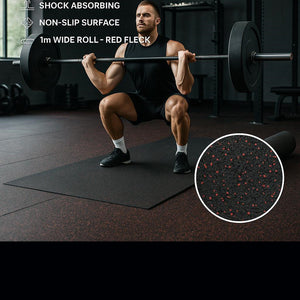
Interlocking rubber tiles are the most popular choice for PT studios across the UK. They're available in various thicknesses — typically 15mm to 40mm — and can be installed without adhesive on most flat surfaces.
The interlocking design means you can configure your layout to fit any room shape and easily replace individual tiles if damaged.
Best for: Mixed-use studios combining free weights, functional training and bodyweight work.
Browse our full range of rubber gym tiles to find the right thickness for your studio.
2. Rubber Rolls
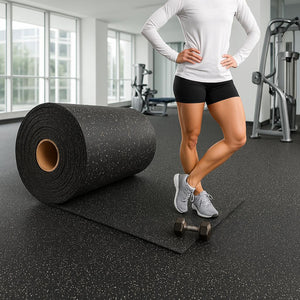
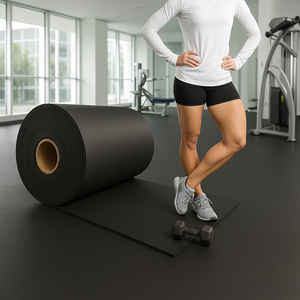
Rubber rolls provide a seamless finish that looks clean and professional. They're ideal for larger studios where you want minimal joints in the floor.
Rolls typically come in 1.2m widths and can be cut to length on-site. They do require adhesive for permanent installation, but the result is a sleek, commercial-grade finish.
Best for: Studios prioritising aesthetics and a premium feel.
3. Composite Tiles with Shock Pads
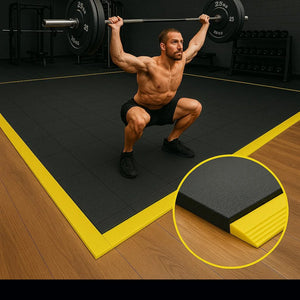
For studios where Olympic lifting or heavy dropping is part of the programme, composite tiles with built-in shock absorption provide the highest level of subfloor protection. These are thicker (30mm–43mm) and engineered to dissipate force across a wider area.
Best for: Strength-focused PT studios with Olympic lifting platforms.
Choosing the Right Thickness
Thickness is one of the most important decisions you'll make. Here's a quick guide based on studio activity:
15mm–20mm: Cardio, bodyweight training, stretching, light dumbbell work (up to ~20kg)
20mm–30mm: General PT use — dumbbells up to 40kg, kettlebells, functional training, battle ropes
30mm–43mm: Heavy free weights, barbell work, Olympic lifts, deadlifts with drops
Not sure which thickness suits your training style? Our thickness guide breaks it down in detail.
Planning Your Studio Layout
Before ordering flooring, sketch out your studio layout. Consider these zones:
Free Weights Zone
This is where your heaviest impacts will occur. Use your thickest flooring here — 30mm minimum.
If you have a dedicated squat rack or deadlift area, consider a 43mm rubber tile or build a lifting platform on top of your base flooring.
Functional Training Zone
For sled pushes, battle ropes, box jumps and agility work, 20mm rubber tiles provide excellent grip and enough shock absorption. Make sure you leave enough open floor — a minimum of 4m x 6m is ideal for most functional circuits.
Stretching & Warm-Up Area
A 15mm rubber floor or even a dense foam overlay works well here. Some PTs prefer to leave a section with a slightly softer surface for mobility work, yoga-style stretching and cool-downs.
Reception & Waiting Area
Don't overlook the entrance. A clean, branded mat or a contrasting colour of rubber tile in the reception area sets the tone for your studio.
Many of our customers use a different colour tile near the entrance to create a visual boundary.
How Much Flooring Do You Need?
Measure your studio space in square metres. Most PT studios range from 30m² to 100m². When ordering, add 5-10% extra for cuts and waste, particularly if your room has irregular shapes or columns.
Quick calculation:
Room length (m) × Room width (m) = Area in m²
Area × 1.05 = Order quantity (with 5% waste allowance)
Installation Tips for PT Studios
1. Prepare the subfloor: Ensure the surface is clean, dry and level. Concrete is ideal. If you're going over existing vinyl or laminate, check it's firmly bonded — loose subfloors will cause movement.
2. Dry-lay first: Lay out all tiles without adhesive to check the fit and plan your cuts before committing.
3. Start from the centre: For interlocking tiles, starting from the centre of the room gives the most symmetrical finish with even border cuts.
4. Use a sharp utility knife: Rubber tiles cut cleanly with a Stanley knife and a straight edge. Replace blades frequently for clean edges.
5. Leave a small expansion gap: Rubber expands slightly with temperature changes. Leave 3–5mm around the perimeter, which skirting boards will hide.
Noise Reduction Considerations
If your PT studio is in a mixed-use building, above a shop, or in a residential conversion, noise is a serious concern. Rubber flooring dramatically reduces impact noise compared to training on bare concrete, but for the best results:
- Use 30mm+ tiles in any area where weights may be dropped
- Consider a double-layer system — a 20mm base layer topped with 15mm tiles — for maximum sound dampening
- Add rubber bump stops to any wall-mounted equipment
- Use a deadlift platform for your heaviest lifts to further isolate impact
Cost Expectations
For a typical 50m² PT studio in the UK, expect to spend between £500 and £1,500 on flooring, depending on thickness and type. Rubber
tiles at 20mm thickness are the most cost-effective option, while thicker composite tiles and rolls will sit at the higher end.
This is a one-time investment that will last 10–15 years with proper care — making it one of the best value purchases in your entire studio fit-out.
Check our current prices and bundles for the latest deals.
Branding Your Studio Floor
Some PT studios use coloured rubber tiles or logos embedded in the floor to reinforce their brand. While custom logo flooring is a premium option, you can achieve a professional look by:
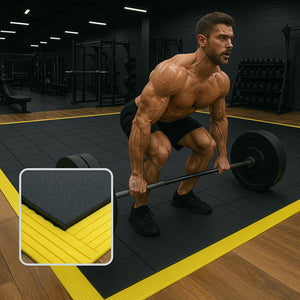
- Using a contrasting border colour around the perimeter
- Creating zone markings with different tile colours (e.g., red for lifting, black for functional)
- Adding a branded floor sticker or vinyl logo in the entrance area
Maintenance for PT Studios
Keeping your studio floor in top condition is straightforward:
- Daily: Sweep or vacuum to remove grit and debris
- Weekly: Mop with a pH-neutral cleaner and warm water
- Monthly: Deep clean with a rubber-safe disinfectant
- As needed: Replace individual damaged tiles (one of the biggest advantages of interlocking systems)
Final Thoughts
Your PT studio flooring is the foundation of every session you deliver. Invest in quality rubber tiles at the right thickness for your training style, plan your layout carefully, and install properly.
The result is a professional, safe and durable training space that impresses clients and protects your subfloor for years to come.
Ready to kit out your PT studio? Browse the full Gym Flooring UK range or get in touch for a personalised recommendation.
Frequently Asked Questions
What flooring is best for a personal training studio?
Rubber tiles (8–15mm) are the most versatile choice for PT studios. They protect the subfloor, reduce noise, and handle a mix of activities from HIIT to kettlebell work. Sprung floor systems are better for dance or yoga-specific studios.
How much floor space does a personal training studio need?
A minimum of 20–30m² is recommended for one-to-one PT sessions with functional movement space. If running small group sessions or using larger equipment like racks or sled tracks, budget 50–80m² or more.
Can I use gym flooring for a yoga or Pilates studio?
Standard rubber gym tiles are too firm for yoga and Pilates without additional mats. Consider cork or foam-topped flooring, sprung hardwood, or vinyl with cushioning for yoga and Pilates-focused studios. Rubber is better for strength and conditioning work.
How do I soundproof a personal training studio in a flat or shared building?
Use 15mm+ rubber tiles over an acoustic underlay (e.g. 5mm foam or rubber crumb). This combination significantly reduces impact noise transmitted through floors. Avoid jumping exercises directly on concrete without proper acoustic flooring.
Is rubber flooring safe for personal training studios with clients?
Yes — rubber gym flooring is slip-resistant, impact-absorbing, and durably safe for client use. Ensure tiles are properly interlocked with no raised edges that could cause trips. Clean with non-slip gym disinfectants regularly.
