






Gym Flooring for Outdoor Areas: What Works in UK Weather?
Gym Flooring for Outdoor Areas: What Works in UK Weather?
Outdoor training has exploded in popularity across the UK. From garden gym setups and boot camp spaces to rooftop fitness areas and outdoor CrossFit rigs, more people are taking their workouts outside.
But the UK's unpredictable weather — rain, frost, heat, and everything in between — presents unique challenges for gym flooring.
This guide covers the best outdoor gym flooring options, what to avoid, and how to create a durable, safe training surface that handles whatever British weather throws at it.
The Challenge: UK Weather vs Gym Flooring
Any outdoor flooring in the UK needs to handle:
- Rain and standing water — the average UK location sees 150+ rainy days per year
- Frost and freeze-thaw cycles — temperatures regularly drop below zero from November to March
- UV exposure — summer sun degrades some materials over time
- Temperature swings — surfaces expand and contract between seasons
- Mud, leaves and debris — outdoor surfaces get dirty fast
Indoor gym flooring isn't always suitable outdoors. Some materials absorb water, become slippery when wet, or degrade in UV light. Choosing the right material from the start saves you from replacing your floor within a year or two.
Best Outdoor Gym Flooring Options
1. Rubber Gym Tiles (Top Choice)
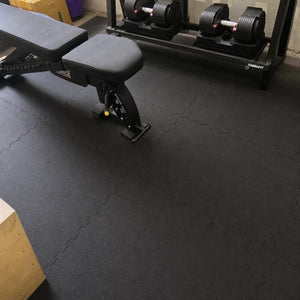
Rubber is the most versatile and durable option for outdoor gym flooring. High-quality vulcanised rubber tiles are naturally water-resistant, UV-stable and unaffected by freeze-thaw cycles. They provide excellent grip even when wet, making them safe for year-round training.
Pros: Extremely durable, excellent wet grip, shock absorbing, easy to replace individual tiles, handles all UK weather conditions
Cons: Can get hot in direct summer sun (rare issue in the UK), heavier to handle than other options
Best thickness for outdoor use: 20mm–30mm
Our rubber gym tiles are ideal for outdoor installations — they drain freely through the joints and won't absorb water.
2. Perforated Rubber Tiles
Specifically designed for outdoor and wet environments, perforated rubber tiles have holes that allow water to drain straight through.
They're commonly used around swimming pools, outdoor showers, and — increasingly — outdoor gym areas. The drainage prevents puddles forming on the surface.
Best for: Areas with poor drainage or that frequently flood.
3. Interlocking Plastic Grid Tiles
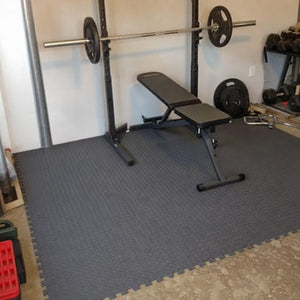
Polypropylene grid tiles (like those used for driveways and event flooring) create a rigid, permeable surface. They're lightweight, snap together easily and handle heavy loads.
While they don't offer the same shock absorption as rubber, they're excellent for bodyweight training, cardio circuits and lighter functional work.
Best for: Boot camp areas, warm-up zones and spaces where you need quick installation and removal.
4. Artificial Turf / Gym Grass
Artificial turf is popular for outdoor functional training — sled pushes, prowler drags, tyre flips and agility work. Quality gym turf has a short, dense pile that's durable under heavy use. It drains well and provides a natural feel underfoot.
Best for: Functional training zones, sled tracks and boot camp areas. Often combined with rubber tiles in different zones.
5. Concrete with Rubber Overlay
If you have an existing concrete patio or slab, adding a rubber tile overlay is the simplest and most effective approach. The
concrete provides a stable, level base, and the rubber adds grip, shock absorption and comfort. This is the setup used by most professional outdoor gym installations.
What to Avoid Outdoors
- EVA foam tiles: Absorb water like a sponge, become slippery, degrade in UV light. Indoor only.
- Carpet tiles: Soak up water, develop mould, fall apart in weeks outdoors.
- Untreated wood: Rots, warps, becomes dangerously slippery when wet.
- Vinyl/PVC rolls: Become extremely slippery in rain and degrade with UV exposure.
- Standard foam underlay: Not designed for foot traffic — collapses and absorbs moisture.
Preparing the Ground for Outdoor Gym Flooring
The base beneath your flooring is just as important as the flooring itself. Here are the main options:
Existing Concrete Slab
This is ideal. Clean the surface, check for level (fill any dips with self-levelling compound) and lay your rubber tiles directly on top. No additional preparation needed.
Compacted Gravel Base
If you're starting from bare ground — such as a garden area — lay a compacted gravel base (Type 1 MOT sub-base, 100mm deep, compacted with a wacker plate).
Top with a thin layer of sharp sand, then lay your tiles. This provides excellent drainage and a stable foundation.
Decking or Patio
Rubber tiles can be laid over decking or patio slabs, provided the surface is level and structurally sound. Check that decking boards aren't rotten and can handle the combined weight of flooring, equipment and users.
Bare Soil or Grass
Not recommended for permanent installations. Soil shifts with moisture, creating an uneven and unstable surface. If you must use grass temporarily (e.g., for a boot camp session), lay large rubber mats that can be removed and dried after use.
Drainage Considerations
Water management is critical for outdoor gym flooring in the UK. Key principles:
- Ensure the ground beneath slopes slightly (1-2%) away from any buildings
- Use tiles with natural drainage — interlocking rubber tiles leave small gaps at joints that allow water through
- For completely flat areas, consider perforated tiles or install a French drain around the perimeter
- Avoid creating a sealed surface that traps water underneath — this leads to pooling, algae growth and instability
Slip Resistance: Staying Safe in the Rain
Slip resistance is non-negotiable for outdoor gym flooring. Rubber tiles naturally provide excellent grip when wet — the textured surface channels water away from contact points, much like a car tyre on a wet road.
Look for tiles with a textured or studded surface rather than a smooth finish. All of our gym flooring tiles feature slip-resistant surfaces suitable for wet conditions.
Garden Gym Setups
One of the most popular outdoor gym configurations in the UK is the garden gym — a dedicated training area in your back garden. Common setups include:
- Patio conversion: Lay rubber tiles over an existing patio. Add a squat rack, bench and weight storage along the house wall. Use a tarpaulin or canopy for rain protection.
- Purpose-built pad: Pour a small concrete slab (3m × 4m minimum), top with 20mm rubber tiles. This gives you a permanent, level outdoor training area.
- Under a gazebo or pergola: A covered structure over rubber flooring gives you an all-weather training space without building a full gym building.
Boot Camp and Group Training Areas
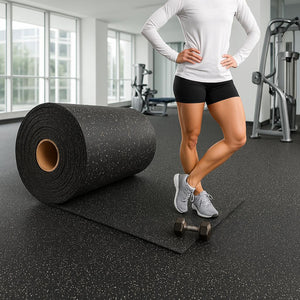
For personal trainers running outdoor boot camps, portable rubber mats or large interlocking tiles create a safe surface for group training in parks and fields. Key considerations:
- Choose tiles that are easy to transport and assemble quickly
- Interlocking tiles without adhesive are ideal — lay them out, train, pack up
- Bring enough to cover the high-impact zones (jumping, burpees, ground work)
- Clean and dry tiles after each session to extend their life
Cost Guide for Outdoor Gym Flooring
Budget setup (12m² patio overlay): £150–£300 with 20mm rubber tiles
Mid-range garden gym (20m²): £300–£600 with 20-30mm rubber tiles
Professional outdoor area (50m²+): £750–£1,500+ depending on thickness and base preparation
Maintenance for Outdoor Flooring
- Weekly: Sweep leaves, dirt and debris. Hose down with water.
- Monthly: Scrub with a stiff brush and mild detergent to prevent algae/moss build-up
- Seasonally: Check tile joints haven't shifted. Re-level any areas affected by ground movement.
- Winter: Rubber handles frost well, but clear ice before training. A quick sprinkle of grit provides extra grip on frosty mornings.
Final Thoughts
Outdoor gym flooring in the UK is absolutely viable — you just need the right material. Rubber tiles are the proven choice for durability, safety and performance in all weather conditions.
Pair them with a solid base, proper drainage and a covered area if possible, and you've got a year-round outdoor training space that handles everything from HIIT circuits to heavy deadlifts.
Ready to take your training outside? Browse our outdoor-suitable rubber tiles or get in touch for advice on your outdoor gym project.
Frequently Asked Questions
What gym flooring is best for outdoor use in the UK?
Rubber crumb or recycled rubber tiles (20mm+) are the best choice for outdoor gym areas in the UK. They drain quickly, resist frost and UV damage, and remain slip-resistant when wet.
Can I use indoor rubber gym tiles outside?
Standard indoor rubber tiles are not designed for outdoor use. They can absorb water, develop mould, and degrade from UV exposure. Always use tiles specifically rated for outdoor or wet environments.
How do I fix outdoor gym flooring to the ground?
Outdoor tiles can be laid on a flat concrete or tarmac base without adhesive for easy maintenance. For permanent installations, use outdoor-grade polyurethane adhesive. Always ensure proper drainage underneath.
Does outdoor gym flooring get slippery in rain?
Quality outdoor rubber tiles have textured surfaces and R11 or R12 slip-resistance ratings, making them safe even in wet UK weather. Avoid smooth vinyl or plastic tiles outdoors as these become extremely slippery when wet.
How long does outdoor gym flooring last in the UK?
Good quality outdoor rubber tiles typically last 10–15 years in UK conditions. UV stabilised tiles will maintain their colour and integrity longer. Replacing individual damaged tiles extends the lifespan of the whole installation.
Ready to Install?
Shop UK-Weather-Rated Outdoor Gym Flooring
UV-stable, frost-resistant and non-slip rubber tiles specifically tested for UK outdoor conditions. Free UK delivery on orders over £50.
★ 4.9/5 from 2,400+ verified reviews | UV-stable | 25-year lifespan