





Best Gym Flooring for Deadlifts and Heavy Lifting UK
Best Gym Flooring for Deadlifts and Heavy Lifting UK
Serious about deadlifts and heavy lifting? Your flooring choice is critical for safety, performance, and protecting your subfloor from damage.
Standard gym flooring isn't enough for Olympic lifting, powerlifting, and heavy deadlifts - you need specialised flooring designed to handle extreme impact forces.
This guide covers everything UK lifters need to know about choosing, installing, and maintaining heavy lifting flooring, from calculating impact forces to building professional deadlift platforms.
Why Thickness Matters for Heavy Lifting
When dropping heavy weights, thickness is your first line of defence against subfloor damage:
Understanding Impact Forces
A dropped 100kg deadlift creates massive impact forces:
- Free fall velocity: Reaches 4.4 m/s from chest height (1m drop)
- Impact force: Can exceed 3,000kg momentarily on contact
- Energy to absorb: Nearly 1,000 joules of kinetic energy
- Contact area: Concentrated into small weight plate diameter
How Thickness Provides Protection
- Energy absorption: Thicker material absorbs more impact energy
- Force distribution: Spreads load over wider subfloor area
- Deceleration time: Increases time to stop weight, reducing peak force
- Bounce reduction: Minimises dangerous weight rebounds
Thickness Requirements by Exercise Type
- Olympic lifting (clean & jerk, snatch): 30mm absolute minimum
- Powerlifting deadlifts: 25-30mm recommended
- General heavy lifting: 20-25mm for controlled drops
- Bodybuilding: 15-20mm for non-dropping workouts
30mm Minimum for Olympic Lifts: Here's Why
Olympic lifting demands the thickest flooring due to the nature of the movements:
Olympic Lifting Characteristics
- Drop from overhead: 2+ metre drop height
- Maximum weights: Often 80-200kg+ loads
- Rapid movements: Explosive lifts followed by controlled drops
- Training frequency: Multiple heavy drops per session
Why 30mm is the Minimum
- Impact energy: Overhead drops generate 3x more energy than deadlift drops
- Subfloor protection: Prevents cracking of concrete or damage to joists
- Safety compliance: Meets British Weightlifting facility standards
- Equipment longevity: Protects expensive Olympic barbells and plates
Professional Standards
- British Weightlifting: Recommends minimum 30mm for competition areas
- IWF standards: International competitions use 40-50mm platforms
- Commercial gyms: Most serious lifting gyms use 30mm+ throughout
- Insurance requirements: Some policies require minimum thickness for commercial use
Building a Deadlift Platform: Complete Guide
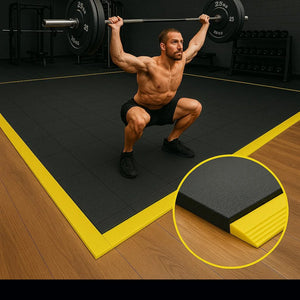
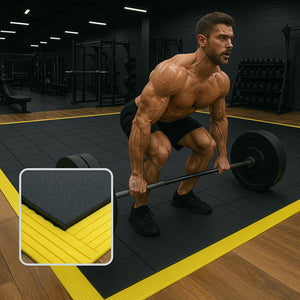
A properly built deadlift platform is the gold standard for heavy lifting areas:
Platform Design Principles
- Size: Minimum 2.4m x 3m for comfortable lifting space
- Height: 75-100mm total thickness including base layers
- Zones: Hard centre strip for feet, soft sides for weight drops
- Stability: Heavy enough to prevent movement (200kg+ total weight)
Materials List for Standard Platform
Base layer (provides stability and height):
- 2x sheets of 18mm OSB or plywood (2.4m x 1.2m each)
- Cost: £60-80 for quality exterior grade
- Purpose: Creates stable, level foundation
Top layer (lifting surface):
- 1x sheet of 18mm plywood (2.4m x 0.8m centre strip)
- Cost: £25-35
- Purpose: Hard, stable surface for feet during lift
Impact zones (weight protection):
- 30-40mm rubber gym tiles for sides (1.2m x 0.8m each side)
- Cost: £200-300 for quality commercial tiles
- Purpose: Absorb impact from dropped weights
Step-by-Step Construction
- Prepare area: Ensure level concrete or wooden subfloor
- Lay base sheets: Place OSB sheets side by side, no gaps
- Secure base: Screw sheets to subfloor (if permitted) or weight down
- Add centre plywood: Position precisely in middle for symmetrical foot placement
- Install rubber tiles: Cut to fit perfectly alongside centre strip
- Test stability: Check all edges are secure and level
Professional Platform Upgrades
- Steel frame: Welded steel base for ultimate stability (+£300-500)
- Regulation dimensions: 4m x 3m for competition standard (+£400-600)
- Integrated storage: Built-in plate storage (+£200-400)
- Aesthetic finishes: Stained wood, custom logos (+£100-300)
Protecting Your Subfloor from Damage
Subfloor damage is expensive and often irreversible - prevention is key:
Common Subfloor Damage Types
- Concrete cracking: Hairline cracks from repeated impacts
- Joist damage: Wooden floor joists can crack or split
- Chipboard compression: Permanent denting and weak spots
- Tile/laminate damage: Cracked or broken existing flooring
Damage Prevention Strategies
- Proper thickness: Use adequate rubber thickness for your lifting style
- Load distribution: Platform systems spread weight over larger areas
- Impact control: Train controlled dropping technique
- Regular inspection: Check for early signs of subfloor stress
Subfloor Assessment Before Installation
- Concrete floors: Check for existing cracks, test with moisture meter
- Wooden floors: Assess joist spacing, check for bounce or flex
- Suspended floors: May need structural reinforcement for heavy use
- Basement floors: Often concrete, check for damp issues
Calculating Impact Force for Your Lifts
Understanding the forces involved helps you choose appropriate flooring:
Basic Impact Force Formula
Force = Weight × (1 + √(2 × Height / Compression))
Example calculation for 100kg deadlift dropped from 1m onto 30mm rubber:
- Weight: 100kg (980N)
- Drop height: 1m
- Rubber compression: 15mm under impact
- Calculated force: ~3,600N (367kg equivalent)
Factors Affecting Impact Force
- Drop height: Higher drops = exponentially more force
- Weight load: Linear relationship - 2x weight = 2x force
- Flooring compression: Softer flooring reduces peak force
- Contact area: Smaller plates concentrate force more
Safe Loading Guidelines
- Residential concrete: Maximum 500kg/sqm repeated loading
- Wooden floors: Maximum 300kg/sqm (check joist capacity)
- Apartment floors: Often limited to 150-250kg/sqm
- Safety margin: Use 50% of calculated maximum for safety
Product Recommendations by Weight Range
Choose the right heavy lifting flooring based on your maximum lifts:
Moderate Heavy Lifting (80-150kg deadlifts)
Recommended: 25mm commercial rubber tiles
- Product: High-density virgin rubber tiles
- Thickness: 25mm minimum
- Cost: £35-45 per sqm
- Coverage: 12-16 sqm deadlift area
- Installation: Direct to subfloor, interlocking
- Durability: 8-10 years with moderate use
Serious Powerlifting (150-250kg deadlifts)
Recommended: 30mm ultra-thick tiles or platform system
- Product: Commercial powerlifting tiles
- Thickness: 30-35mm
- Cost: £45-60 per sqm
- Coverage: 16-20 sqm including approach area
- Special features: Reinforced backing, higher durometer
- Durability: 10-12 years with heavy use
Elite/Competitive Lifting (250kg+ deadlifts)
Recommended: 40mm professional platform tiles
- Product: Competition-grade rubber flooring
- Thickness: 40-50mm
- Cost: £60-80 per sqm
- Coverage: Full platform system recommended
- Certification: Meets IWF/BWL standards
- Durability: 15+ years with proper maintenance
Olympic Lifting (Any weight)
Recommended: Professional lifting platform
- System: Plywood base + 30-40mm rubber sides
- Dimensions: 3m x 4m regulation size
- Cost: £800-1,200 complete system
- Installation: Professional recommended
- Benefits: Optimal safety and performance
Specialized Flooring for Different Lifting Styles
Different lifting disciplines have unique flooring requirements:
Powerlifting-Specific Features
- High durometer rating: 70-80 Shore A for minimal compression
- Dense construction: Minimal air bubbles for consistent feel
- Smooth surface: Easy cleaning, good foot grip
- Precise dimensions: Consistent thickness across all tiles
Olympic Lifting Requirements
- Rapid impact absorption: Must handle explosive drops
- Minimum bounce: Prevents dangerous weight rebounds
- Temperature stability: Consistent performance in varying conditions
- Platform integration: Must work with wooden lifting surfaces
Strongman Training Adaptations
- Extra coverage area: Large implement lifting requires more space
- Varied thickness zones: Different areas for different implements
- Outdoor capability: Weather-resistant for outdoor training
- Easy repositioning: Portable systems for training variety
Installation Considerations for Heavy Lifting Areas
Proper installation is crucial for heavy lifting flooring performance:
Subfloor Preparation
- Levelness check: Maximum 3mm variation per 2m length
- Moisture testing: Especially important for basement gyms
- Structural assessment: Verify subfloor can handle loading
- Cleaning: Remove all debris, dust, and contaminants
Professional vs DIY Installation
DIY suitable for:
- Standard interlocking tiles on good subfloor
- Small areas (under 30 sqm)
- Moderate weight training only
- Budget installations
Professional installation recommended for:
- Competition-level lifting areas
- Large commercial installations
- Complex platform systems
- Insurance/warranty requirements
Quality Installation Techniques
- Acclimation: Allow flooring to reach room temperature
- Expansion gaps: Leave 5-10mm around perimeter
- Proper tools: Use dead blow hammer, not standard hammer
- Progressive installation: Work from walls towards centre
Maintenance for Heavy Lifting Floors
Proper maintenance extends the life of your deadlift platform flooring:
Daily Maintenance
- Surface cleaning: Wipe sweat and chalk immediately
- Weight placement: Don't leave weights on floor long-term
- Inspection: Check for loose tiles or damage
- Ventilation: Maintain good airflow to prevent odours
Weekly Deep Cleaning
- Rubber cleaner: Use appropriate pH-neutral cleaners
- Chalk removal: Vacuum or sweep thoroughly
- Moisture check: Ensure no standing water or damp areas
- Tile alignment: Re-seat any tiles that have shifted
Monthly Inspections
- Wear patterns: Look for excessive wear or compression
- Edge condition: Check tile edges for cracking or damage
- Subfloor check: Look for any signs of underlying damage
- Replacement planning: Identify tiles that need future replacement
Annual Maintenance
- Deep inspection: Remove some tiles to check underneath
- Replacement program: Replace heavily worn tiles proactively
- Platform review: Check wooden elements for wear or damage
- Upgrade assessment: Consider improvements based on usage
Commercial Gym Standards and Requirements
Commercial facilities have specific requirements for heavy lifting areas:
Insurance and Liability
- Minimum thickness requirements: Often 30mm for powerlifting areas
- Installation certification: Professional installation may be required
- Regular inspection: Documented safety checks required
- Replacement schedules: Proactive replacement to prevent accidents
Health and Safety Compliance
- Slip resistance: Must meet BS 7976 standards
- Fire rating: May need specific fire resistance ratings
- Chemical resistance: Must withstand commercial cleaning products
- Impact testing: Regular testing may be required
User Experience Standards
- Consistent surface: Even texture and height across lifting area
- Noise control: Appropriate for multi-use facilities
- Easy maintenance: Must be efficiently cleanable
- Durability expectations: Minimum 10-year lifespan
UK Suppliers and Product Availability
Finding quality heavy lifting flooring from UK suppliers:
Specialist Gym Equipment Suppliers
- Powerhouse Fitness: Wide range of professional flooring
- Wolverson Fitness: Specialist in British-made equipment
- Rogue Fitness Europe: High-end competition equipment
- Watson Gym Equipment: Commercial gym specialists
Building Trade Suppliers
- Wickes/B&Q: Basic rubber tiles and plywood for DIY platforms
- Travis Perkins: Commercial-grade materials
- Selco: Trade prices on bulk orders
- Jewson: Specialist rubber flooring department
Online Marketplace Considerations
- Quality verification: Check certifications and reviews carefully
- Delivery logistics: Heavy flooring requires specialist delivery
- Return policies: Important for large, expensive orders
- Installation support: Consider suppliers offering installation services
Frequently Asked Questions
How thick should gym flooring be for deadlifts?
For deadlifts, use minimum 25mm thickness for weights up to 150kg, 30mm for 150-250kg, and 35-40mm for competitive powerlifting over 250kg. The heavier your lifts, the thicker the flooring needed to protect your subfloor and ensure safety.
Do I need a deadlift platform or are thick rubber tiles enough?
Rubber tiles alone are sufficient for most home deadlifting up to 200kg. A platform becomes essential for Olympic lifting, competitive powerlifting, or when you need the stable wooden centre strip for optimal foot positioning and competition practice.
What's the difference between gym flooring and deadlift platform flooring?
Regular gym flooring is typically 15-20mm thick for general use. Deadlift platform flooring is 30mm+ thick, specifically designed to handle extreme impact forces from dropped weights. Platform flooring also has higher density and more precise manufacturing tolerances.
How much weight can 30mm rubber gym flooring handle?
Quality 30mm rubber flooring can safely handle repeated drops of 200-300kg+ from deadlift height (1m). The exact capacity depends on the rubber quality, subfloor condition, and dropping technique. Always consider your subfloor capacity as well as the rubber.
Should I glue down heavy lifting flooring or leave it floating?
Heavy lifting flooring should typically be left floating (not glued) to allow for thermal expansion and easier replacement. The weight of quality tiles provides sufficient stability. Only glue down if specifically required by manufacturer or for commercial applications.
Build Your Ultimate Heavy Lifting Area
Browse our selection of professional-grade gym flooring designed for serious lifters. From 30mm commercial tiles to complete deadlift platform systems, we have everything you need for safe, effective heavy lifting.
